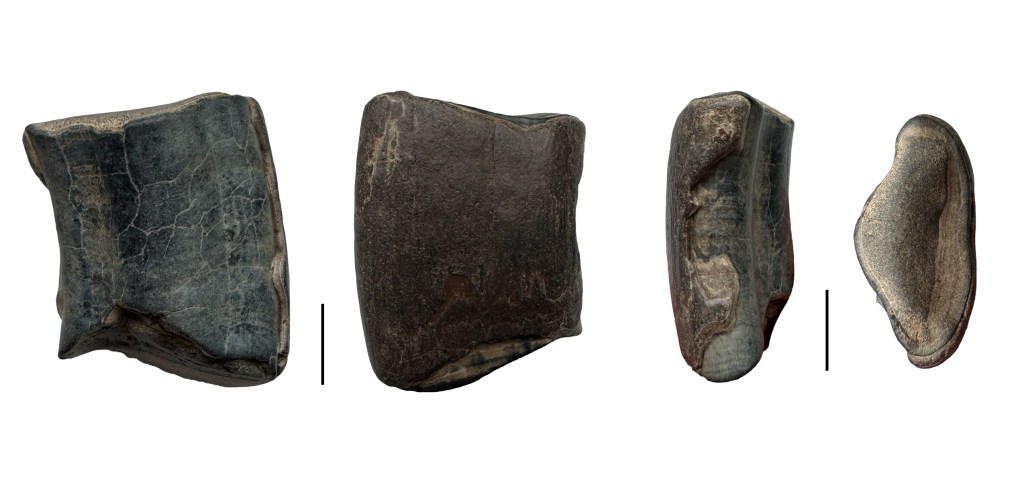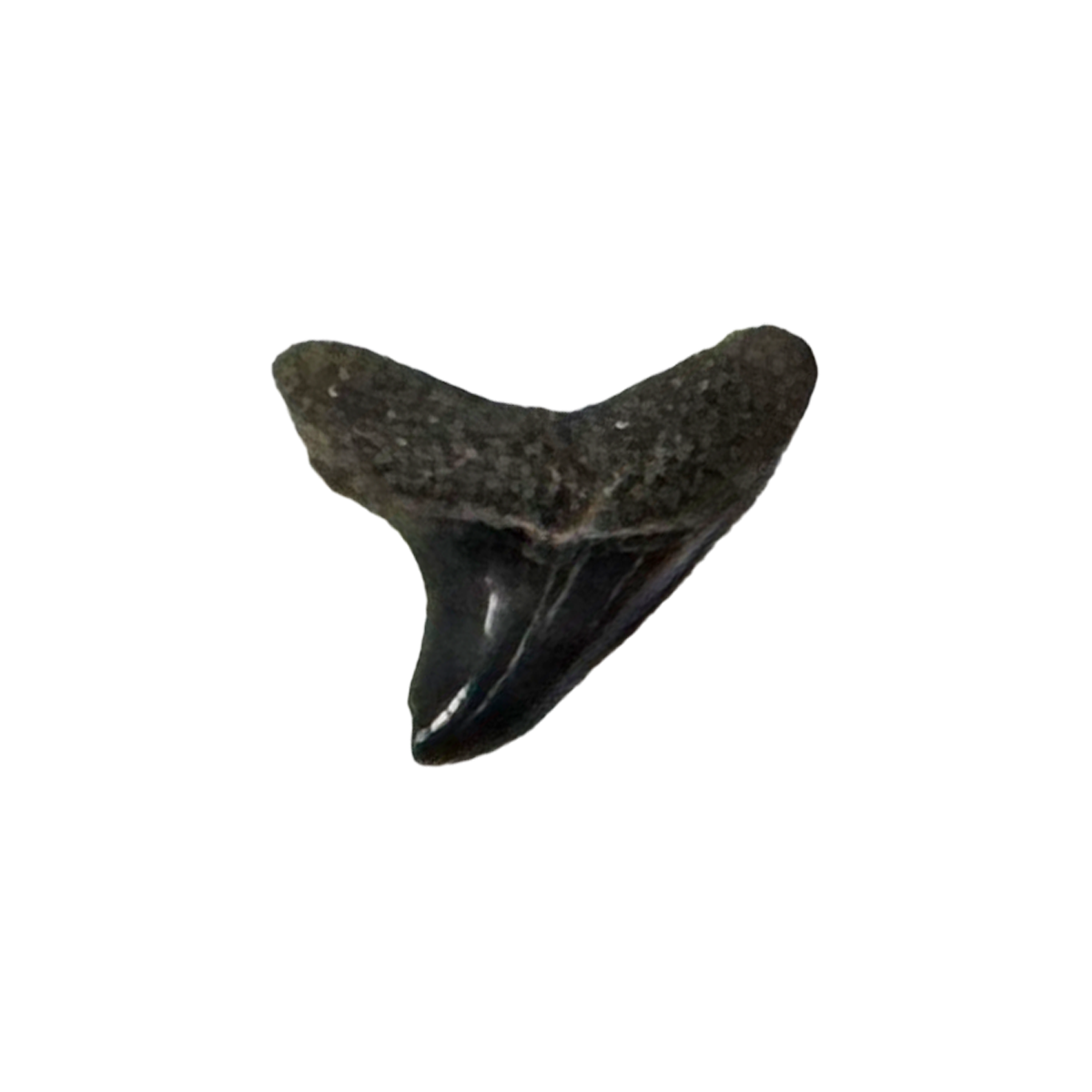
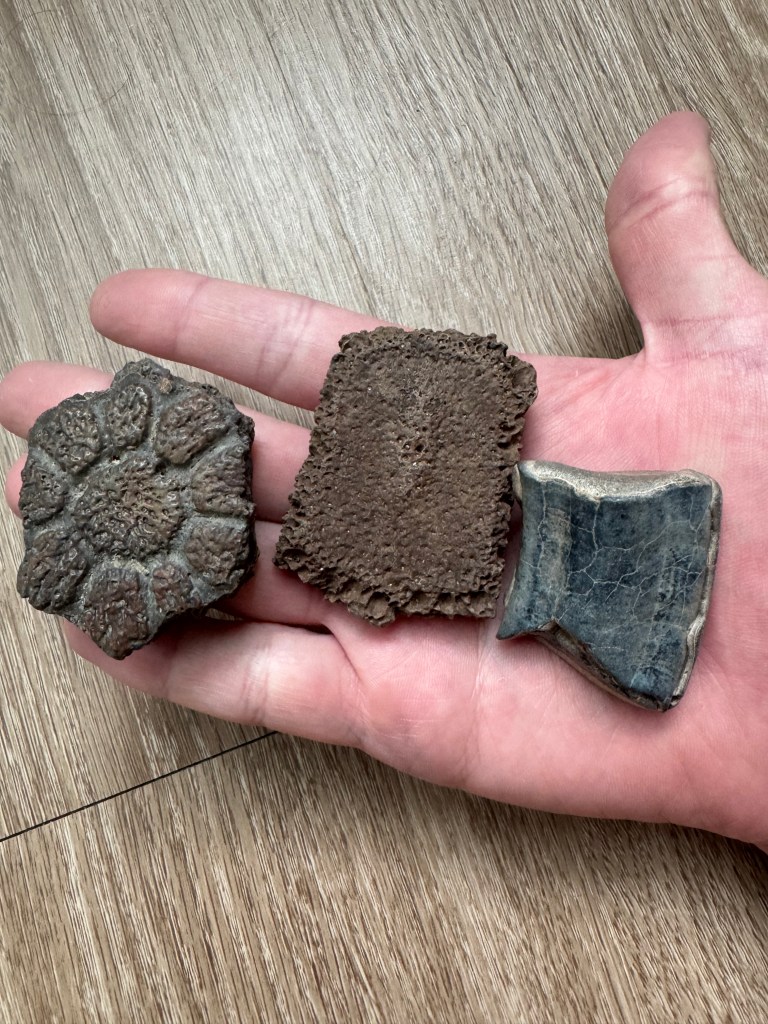
Xenarthra are a diverse and incredibly interesting superorder of mammals that can be found in the Peace River. It includes at least 3 armadillo species and numerous giant ground sloth species that can be found in the Peace River. Fossils from this group are rare and highly desirable. They are among my personal favorites to find!
Armadillos (Cingulata)
There are 3 species of armadillos found in the Peace River (That I can identify), this includes Dasypus bellus an extinct armadillo around doulbe the size of the modern day Dasypus novemcinctus (nine-banded armadillo) that is still found in Florida. There is also the two giant armadillos, Glyptotherium cylindricum and Holmesina septentrionalis (maybe Holemsina floridanus as well?). These were much larger, adults being several feet tall! The most common find for this group will be osteoderms from their thick armored shell.
Dasypus bellus
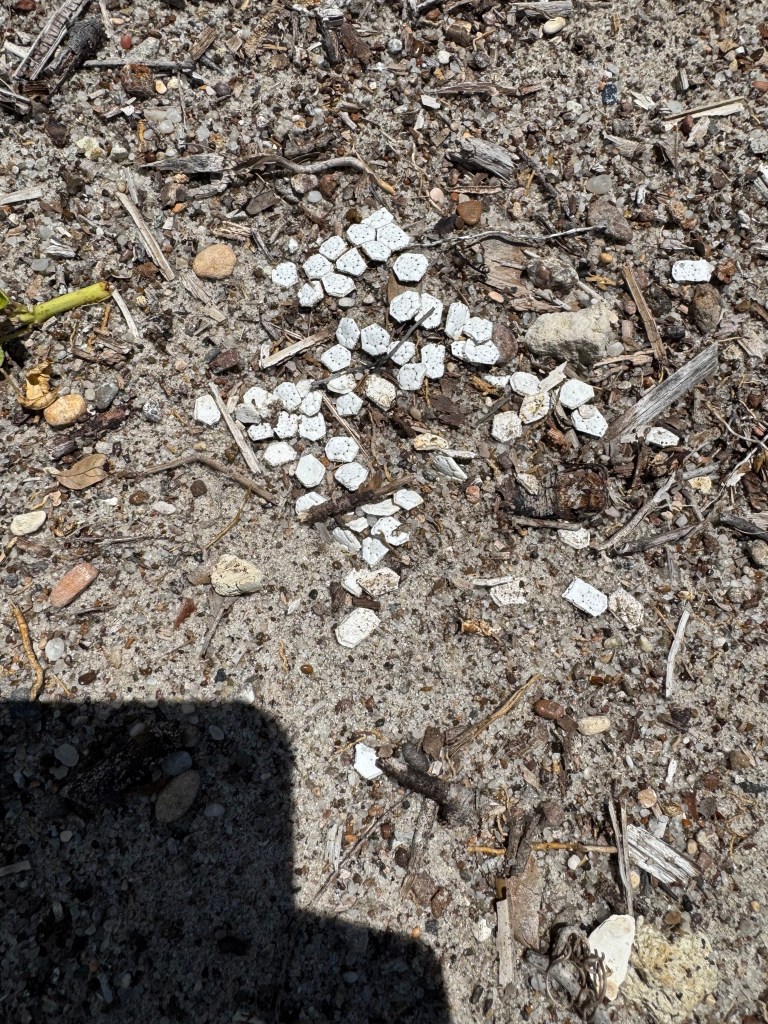
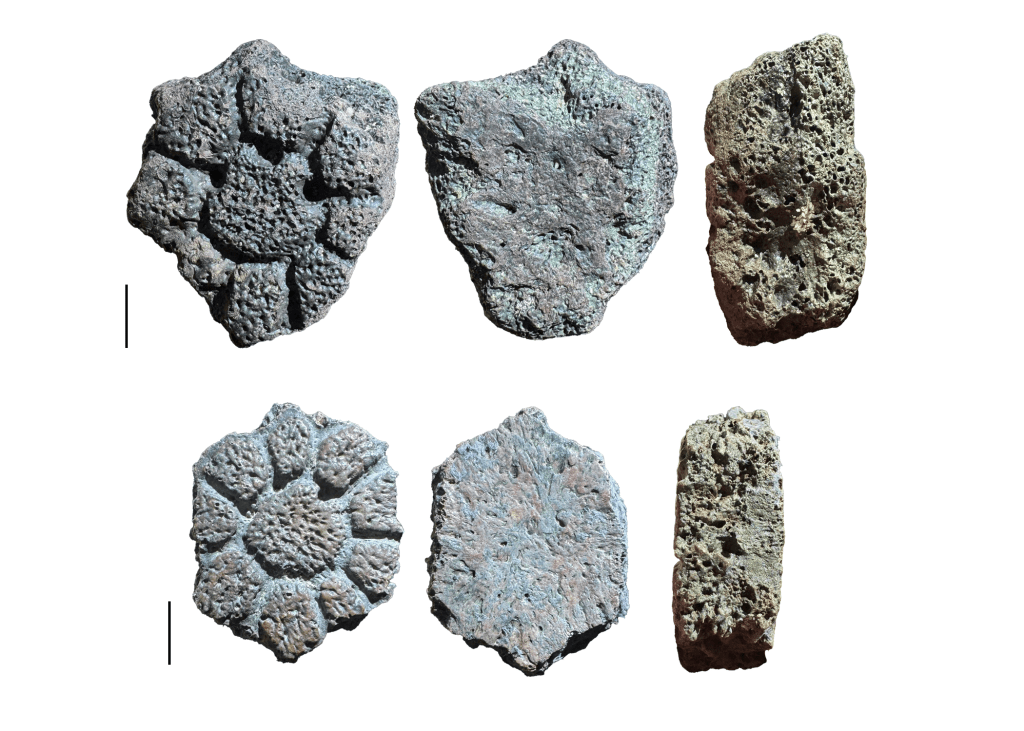
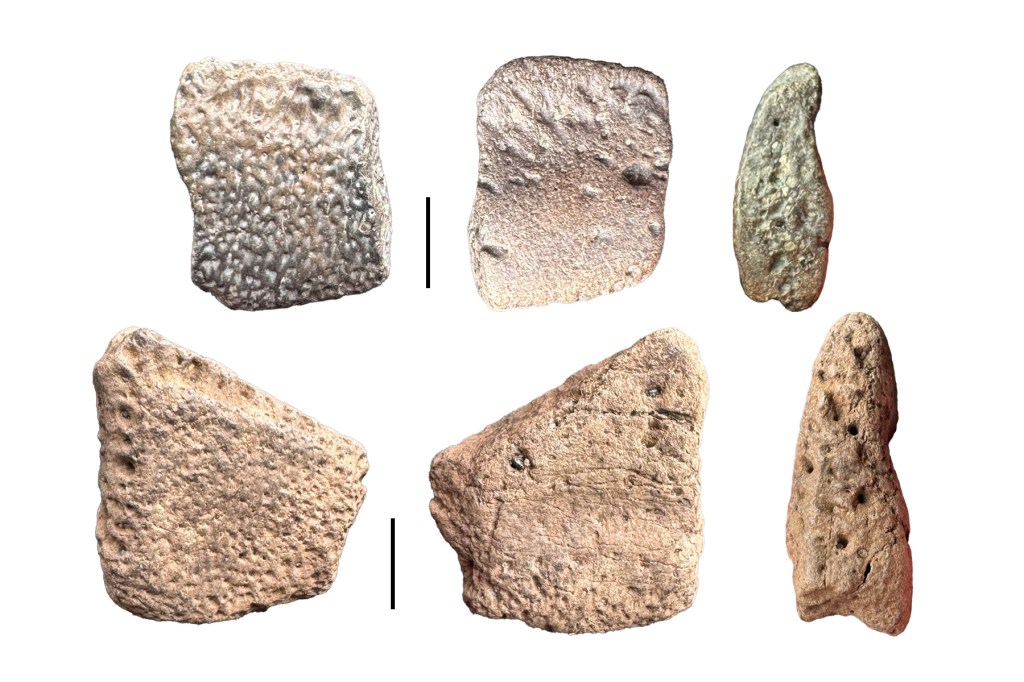
As mentioned Dasypus is double the size of the modern species and much smaller than the other Cingulates found in the Peace River. Their osteoderms come in two main shapes, the more rectangular type and the common hexagonal scute. They have two or more notable holes visible and have a characteristic pattering. The edges are porous and rough where they would connect like suture lines to other osteoderms. The FLMNH reports they existed from 2.5 million to 11,000 years ago.


Glyptotherium cylindricum
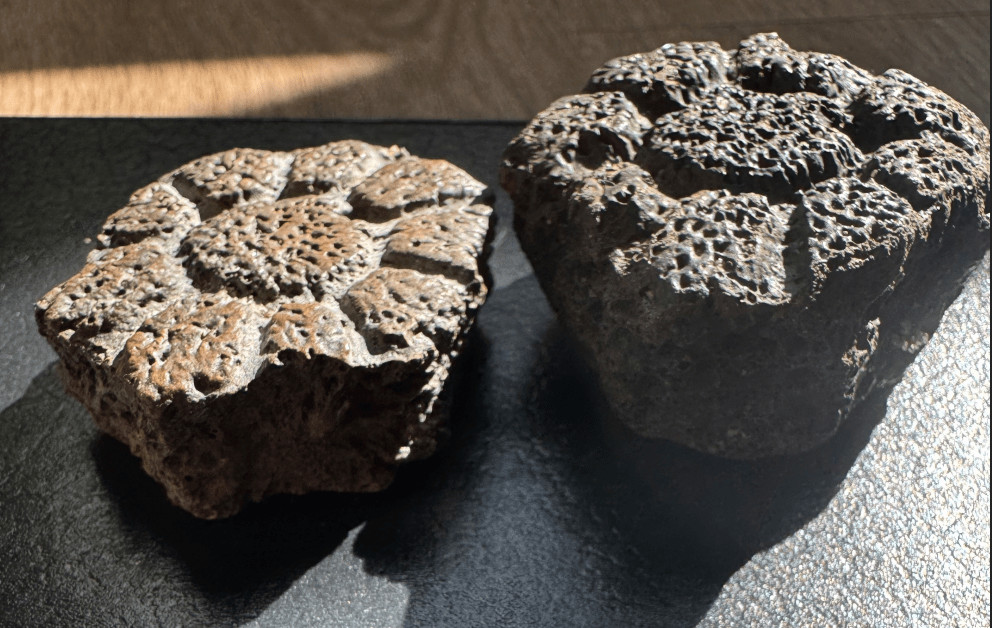
Glyptotherium was a large armadillo sitting at several feet tall and around 6 feet long fully grown! They are often mentioned as the size of a Volkswagen beetle. It had a thick armored shell composed of bone osteoderms that are found relatively regularly in the Peace River today. There are several types of osteoderms found from different parts of the shell, including edges, spikes, and size variations. The scutes are of similar hexagonal shape to the Dasypus bellus type but much larger with a characteristic daisy-like pattern. The scutes are porous on the outer surface and relatively flat on the inside. Thickness varies based on climate and age but they are usually at least a centimeter thick.



Holmesina septentrionalis
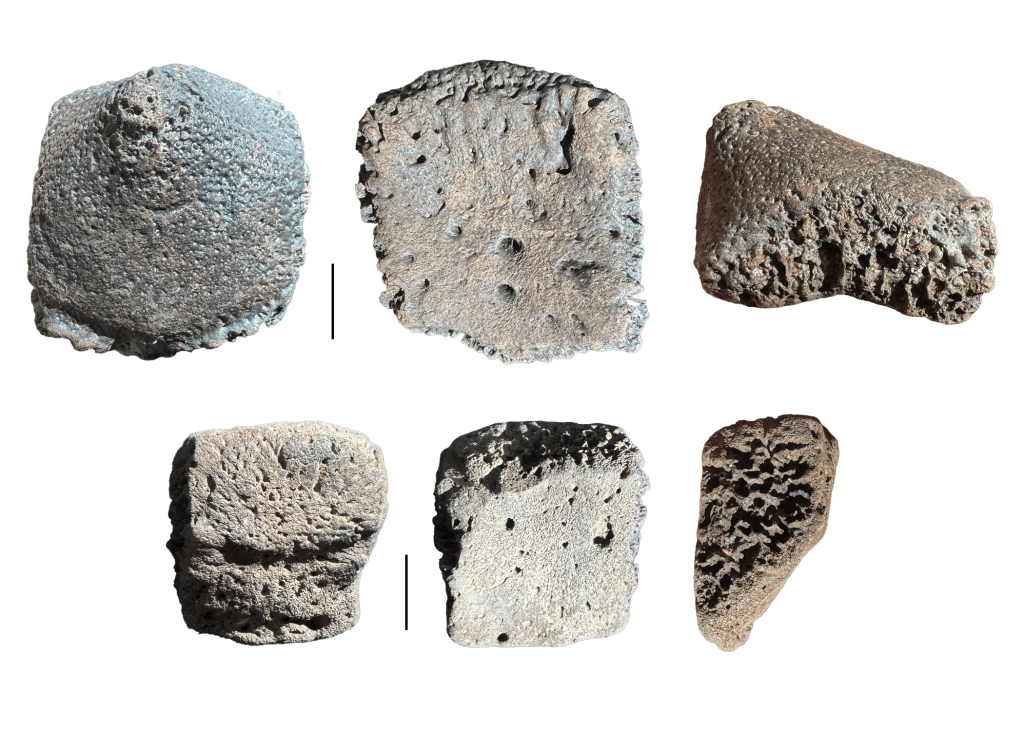
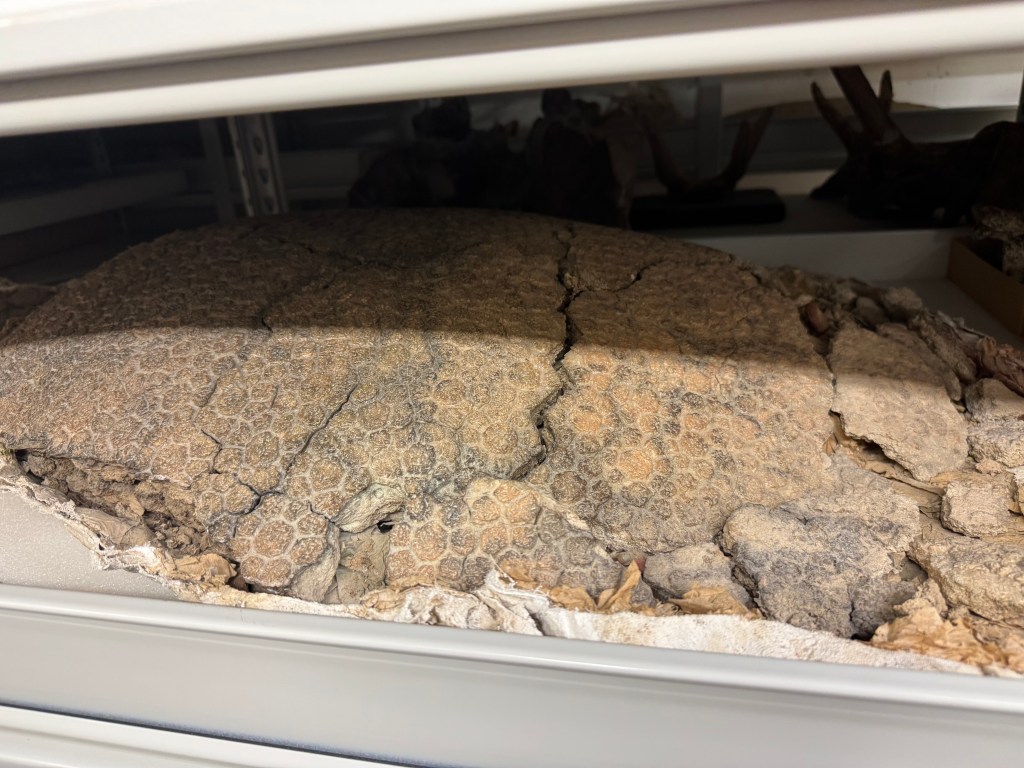
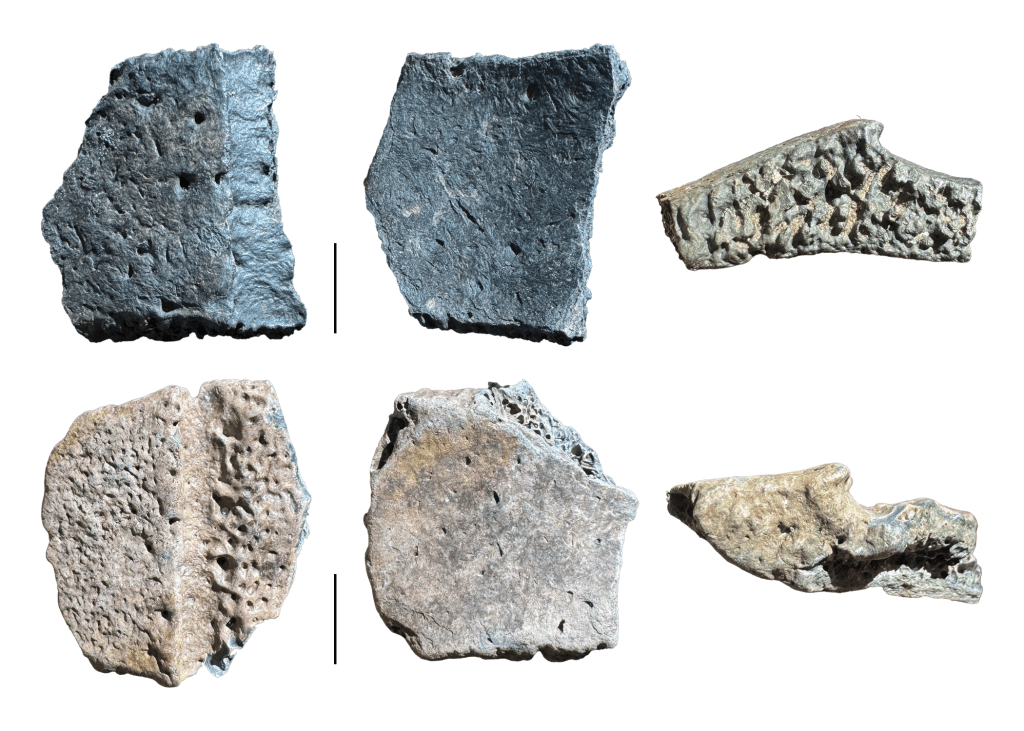
Holmesina is the other genus of giant armadillo commonly found in the Peace River. It was slightly smaller than the Glyptotherium but still much bigger than the current remaining armadillo in Florida. Holmesina septentrionalis and likely Holmesina floridanus are found in the Peace River but I am not qualified in mammals enough to make that distinction. Their osteoderms are large and either rectangular or hexagonal with a raised ridge along the center. They are porous on the top side from innervations of nerves and blood vessels. These and Glyptotherium osteoderms were likely covered by scutes that unfortunantely do not preserve. They tend to be thinner than Glyptotherium. Holmesina have flex scutes similar to Dasypus that are seen in figure 2.


Giant sloths (Pilosa)
Giant ground sloths were an incredibly interesting group of animals present in the Florida fossil record. They were large ground dwelling sloths (versus the climbing sloths we see in the modern day) that could stand tall and to eat branches and leaves from high trees. There was 3 species of sloths in the Peace River and they are mostly known from their teeth and claws, although other bones can be found by the lucky collector! Their teeth are incredibly rare and often very fragile so must be handled gently when found. Part of the rarity is the lack of enamel on ground sloth teeth, making it harder to preserve. They also only have a single set of teeth that grow throughout life versus sharks for example that continuously lose and replace teeth. The main differences between these teeth will be size and shape. Overall for these teeth first identify that it is indeed a sloth then compare with complete skulls to ascertain species and position in the jaw.

Paramylodon harlani
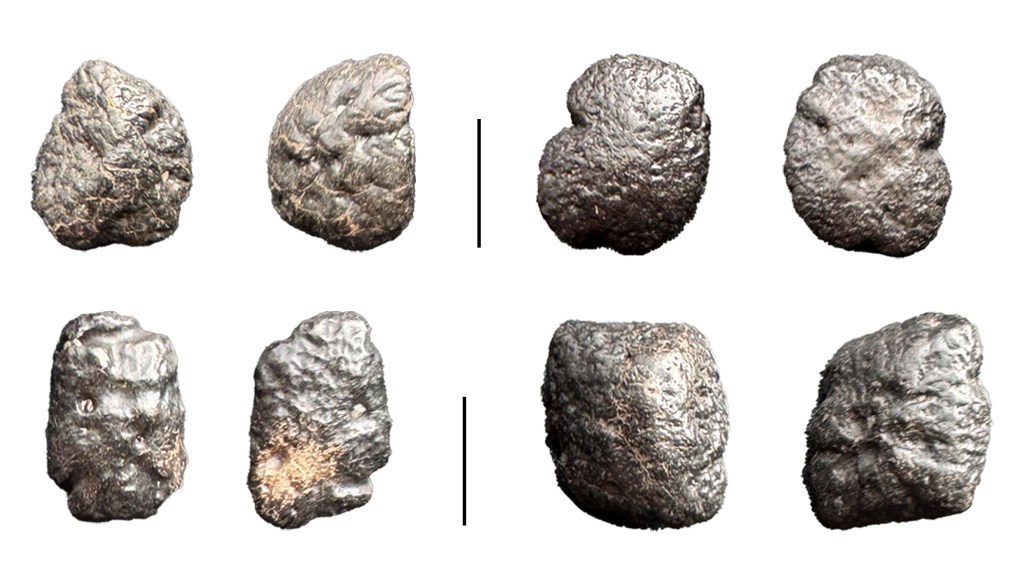
Paramylodon harlani were similar in size with Megalonyx, close to 10 feet at full height. They are one of the more interesting sloths in Florida as they had additional bony armor osteoderms in its fur around the shoulders and back. Their teeth are more ovular or round in shape than the rectangular Megalonyx. Paramylodon is the only sloth found in the Peace River that had ossicles, essentially bony armor worked in the fur around the shoulders and back. These ossicles are hard to identify but the ones that I have found were confirmed by Richard Hulbert, a well known Florida vertebrate paleontologist.

Eremotherium eomigrans
E. eomigrans was the largest species of ground sloth in the Peace River’s fossil record and their teeth match their enormous size! On their hind legs they could stand over 10 feet tall and weighed several tons, much larger than the contemporary sloths. Eremotherium was present from about 2.6-0.6 million years ago according to the FLMNH. Their teeth are large and can be hard to recognize due to the lack of enamel but look for the curvature and texture of dentine as seen on this tooth.


Megalonyx jeffersonii
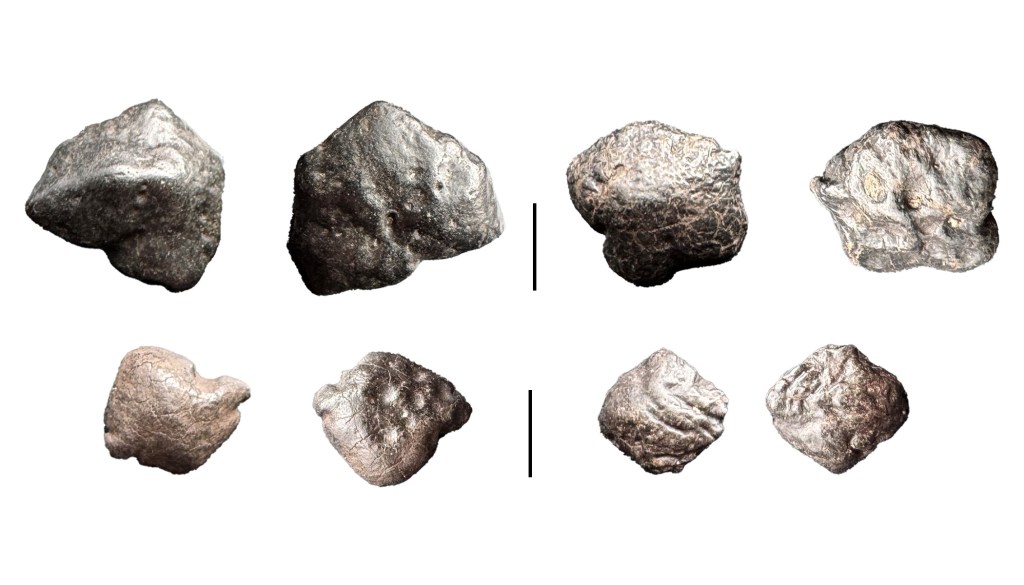
Megalonyx jeffersonii were smaller in comparison to Eremotherium but still stood close to 10 feet tall, still large enough to reach their food in the trees! As the species name implies they were originally identified by Thomas Jefferson himself! Though with the limited knowledge of the time they were misidentified as lion-like predators. Their teeth are rectangular in most positions. The canines are more ovular with a rounded bump in the middle as seen in the example images. The two examples in my collection are both canines, limiting my abilities to identify them. As I find more in time I will add to this section.