
Sirenia fossils are very common in the Peace River originating from the Dugong, a manatee-like siren but with a different tail shape and occasionally from manatees themselves. There are multiple species but the most common is Metaxytherium floridanum. M. floridanum lived during the Miocene around 7-14 million years ago according to the FLMNH. The only fossils that I own from Dugongs are rib bones, however one can also find skull caps, teeth and other bones. The ribs are incredibly dense and lack a porous, spongy, layer that most bone contains. The rib bones may also have apparent growth rings on the cross section. As far as bones in the Peace River go these are the most common due to the density preserving them well.
Ribs
As mentioned rib bones are the most common finds from dugongs. They are solid, rounded and cylinder like. They are often tumbled and broken into smaller sections but can regularly be found in big chunks, especially in areas with larger gravel. The ends are solid with no spongy bone or internal canal. They often contain borings from clams and other invertebrates looking for a snack on the ancient sea floor and ending up leaving holes throughout the bone.


Other Bones
Teeth
Dugong
Manatee
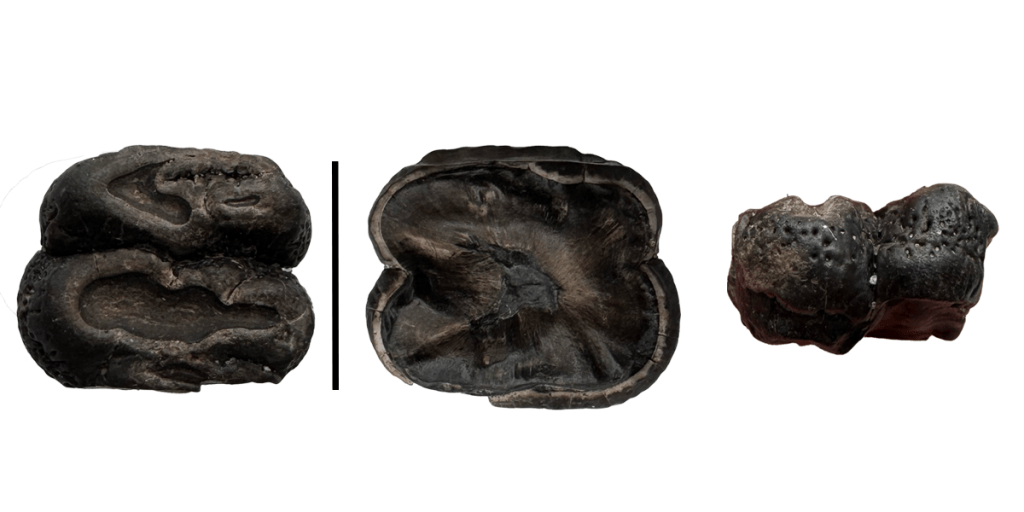
Trichechus manatus is the species of manatee currently present around Florida’s waterways but they have been present for millions of years in parts of Florida, being found in the Pliocene or Pleistocene sediments of the lower Peace River. I have only found one tooth from a manatee over many years and this is likely due to the more terrestrial nature of the peace river area by the time manatees were swimming in Florida rivers and seas while the older dugongs are significantly more common in the fossil record. Their teeth are uniquely different from dugongs with a flattened chewing surface consisting of 2-3 humps. They can appear superficially similar to a worn tapir tooth but have a very different chewing surface and are significantly smaller (compare to the maxillary tapir teeth imaged under land mammals). Manatees have an interesting tooth replacement system with new teeth coming from the back of the jaw and moving forward over time as the animal grows with age, this can be seen on the wear patterns of forward teeth versus rear.