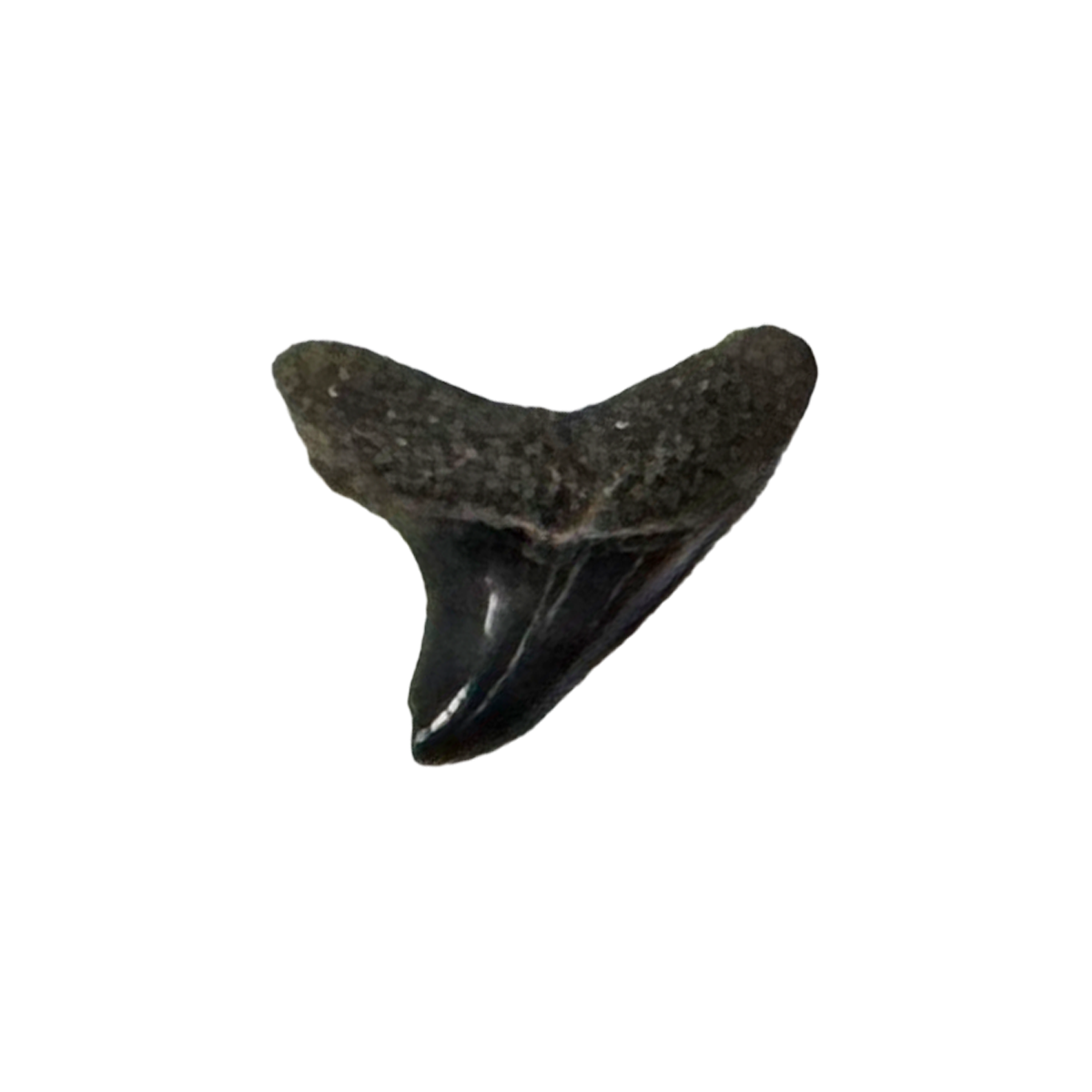
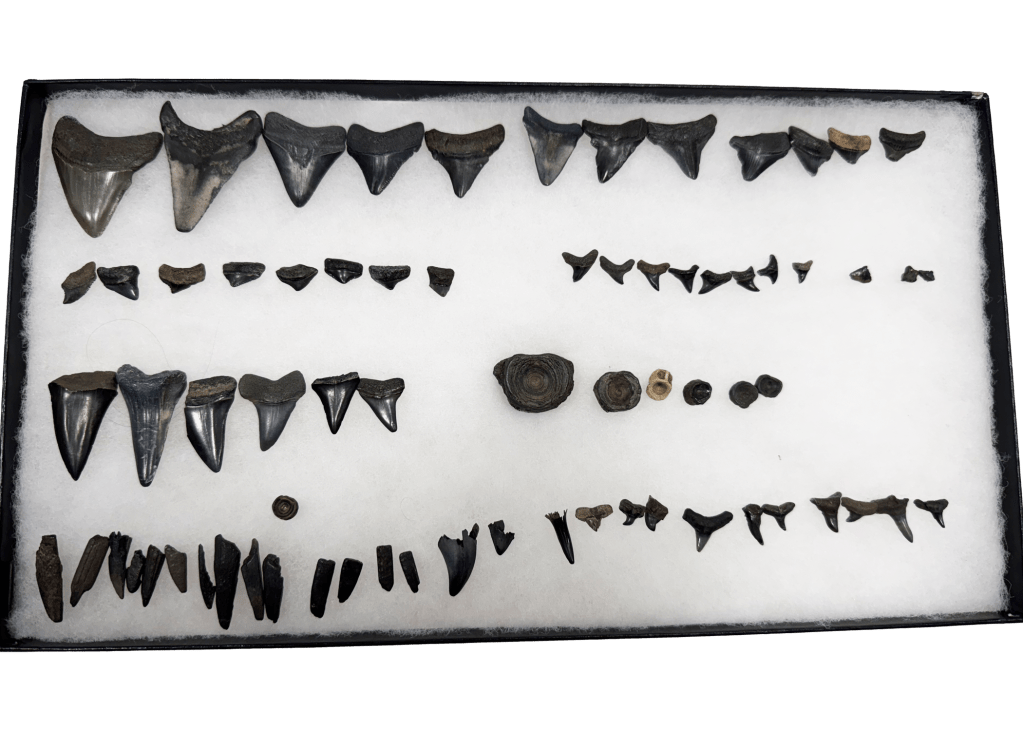
A variety of shark species and types of fossils can be found from the famous megalodon teeth reaching up to 7 inches long to microscopic teeth. Outside of teeth you can also find fossilized vertebrae, cartilage, coprolite(Fossilized poop!), denticles and more! I will attempt to cover as much as possible but the teeth will be the most common finds and therefore the focus.
If you are having trouble identifying any teeth from this guide contact me via email!
Lamniformes
O. megalodon
The most desirable find for most fossil hunters in the Peace River is an Otodus megalodon tooth. Their teeth range from less than 1/4 inch tall to over 7 inches, depending largely on jaw position and shark size. Small, curved, teeth with wide roots are from further back in the jaw, called posterior while the anterior teeth are straight triangles. Their teeth are serrated with a deep root curve and have a notable bourlette, the line that is between the blade and root. These are some examples coming from different jaw positions and with a variety of sizes to help show some variety. Lower jaw teeth in general are more narrow while the upper jaw has wider teeth, this is true on many sharks as the teeth are able to hold tight on their prey while the upper jaw slices chunks of flesh off.
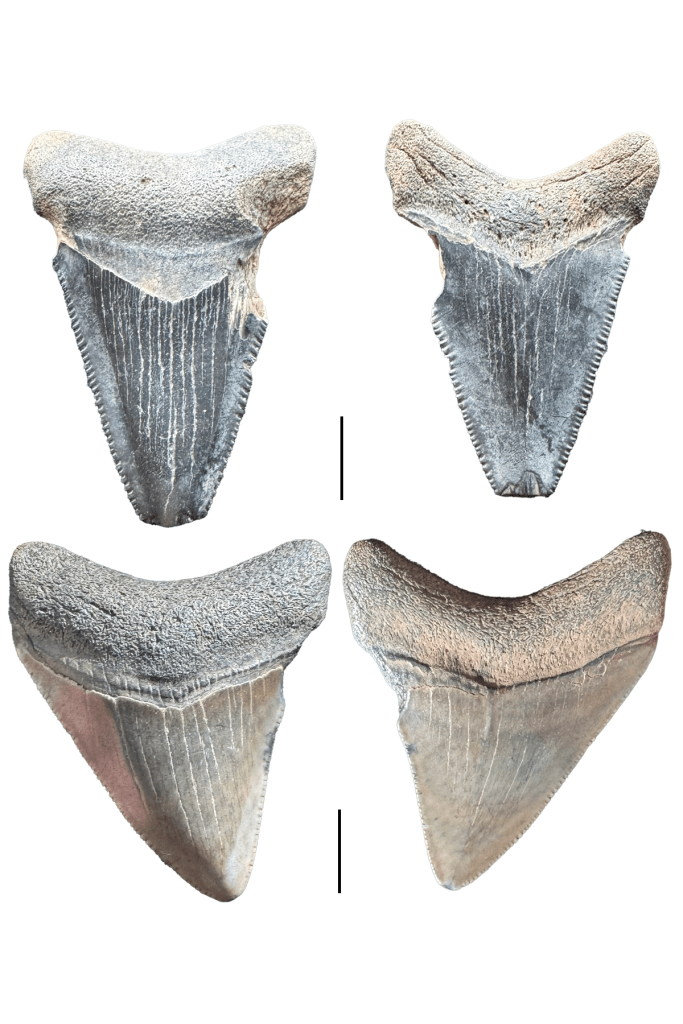
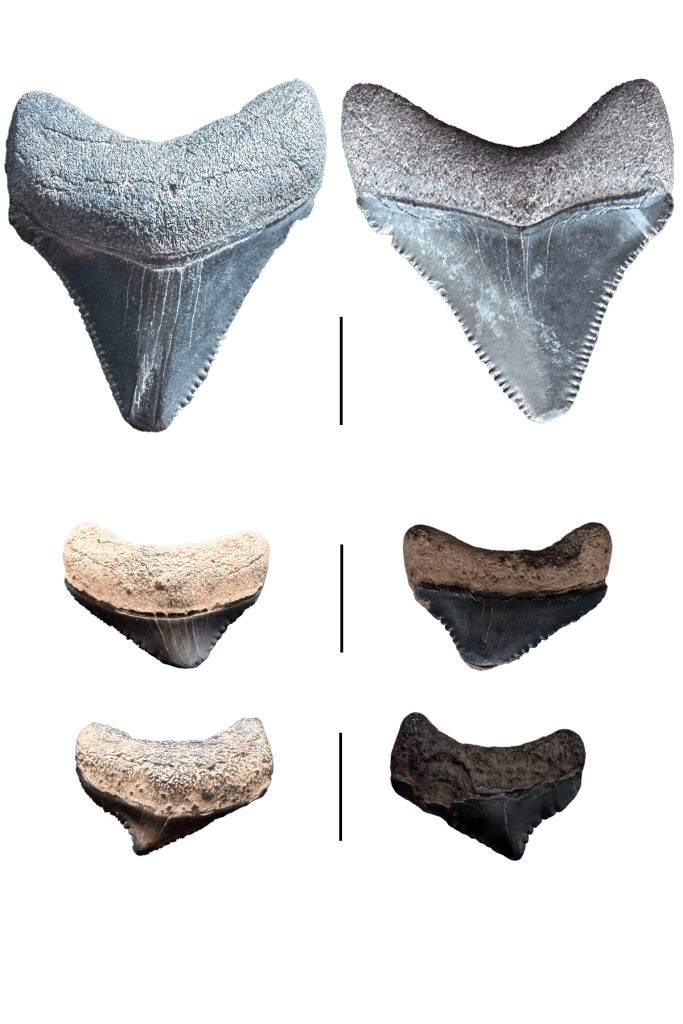
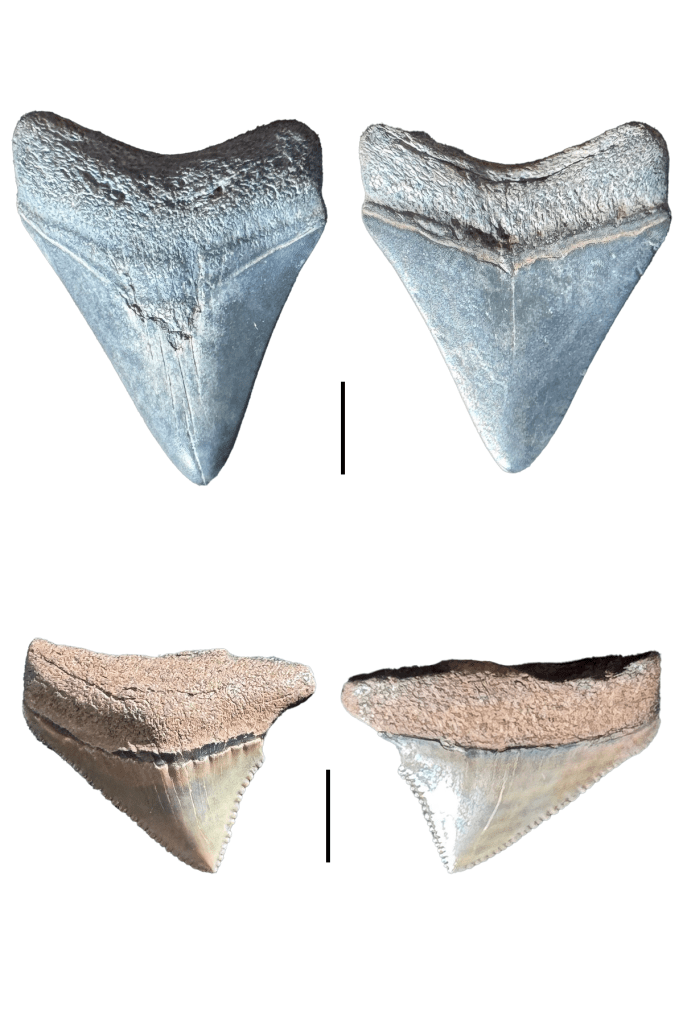
- Similar teeth:
- C. hastalis: no serrations and no bourlette
- Great White: coarse, uneven serrations, no bourlette
C. hastalis (lesser white shark)
Another of the larger teeth that can be found in the Peace River is Carcharodon hastalis, an ancestor to the great white. The genus is heavily debated and some researchers are also pursuing the idea that the teeth commonly identified as hastalis may be from 2 different species. The teeth are unserrated, with smooth crowns. Upper jaw teeth are wide while lower jaw can be more narrow. They can get up to around 3 inches long but be aware of posterior hastalis teeth, they will have thick roots despite their small size.
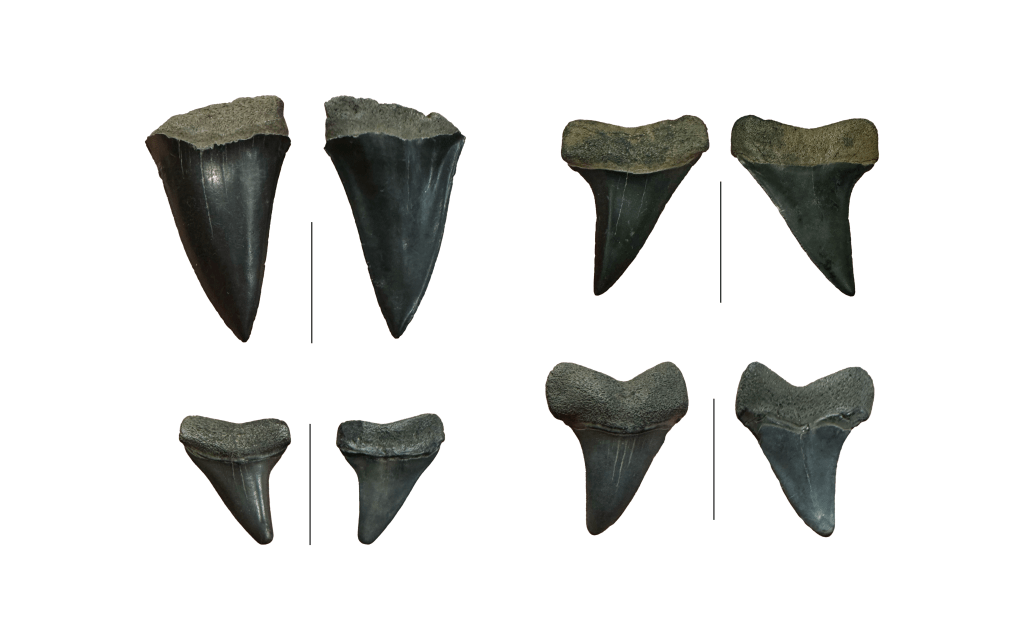
- Similar teeth:
- O. megalodon: Serrated with a bourlette
- N. brevirostris (Lemon Shark): smaller with a narrow blade, can mimic posterior hastalis teeth but will have a narrow root in comparison.
Sand Tiger
Carcharias taurus teeth are uncommon to find in good condition in the Peace River. Their teeth are long and slender with diagnostic cusps on each side of the blade and a notch on the root lobe. They are not serrated. Anterior teeth are easily distinguishable even without cusps due to the slender nature.
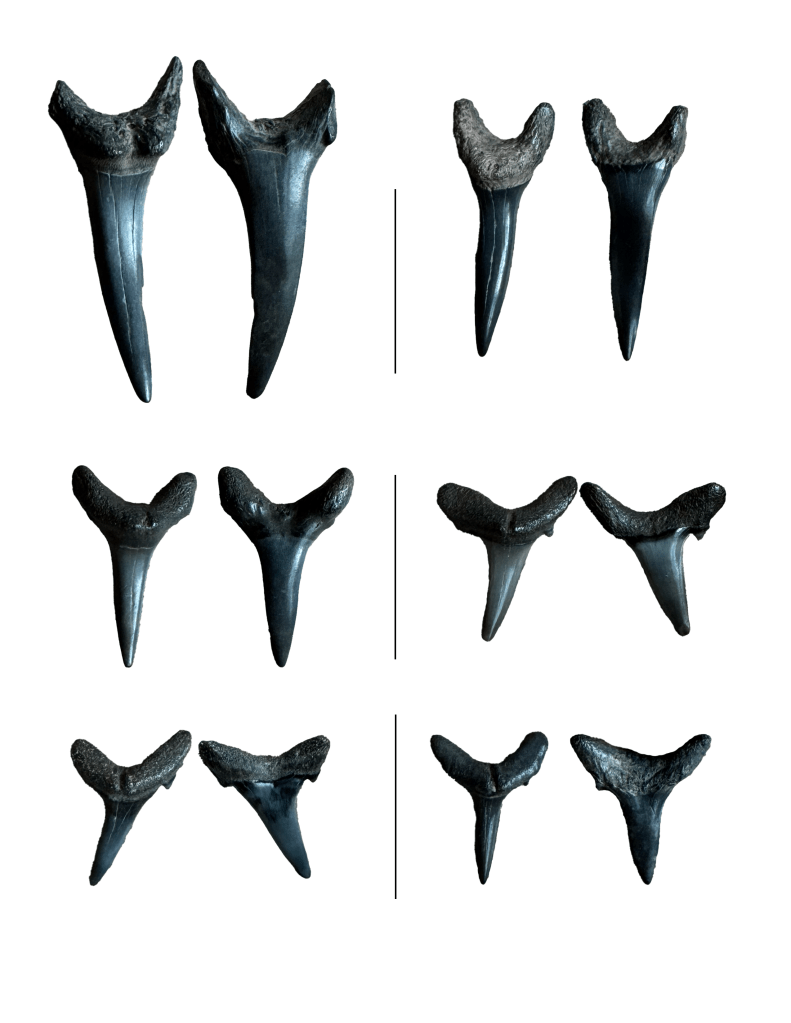
Thresher
Thresher sharks of the genus Alopias are rare finds in the Peace River and often missed due to their small size and similarities to other teeth. The species present are likely Alopias superciliosus and Alopias vulpinus as well as possible the Giant Thresher Alopias grandis. I will stick to general identification for this guide. Thresher teeth are small, unserrated and completely smooth. They often have a deep curve but anterior teeth can be nearly straight. Roots are curved and they have a very unique look.
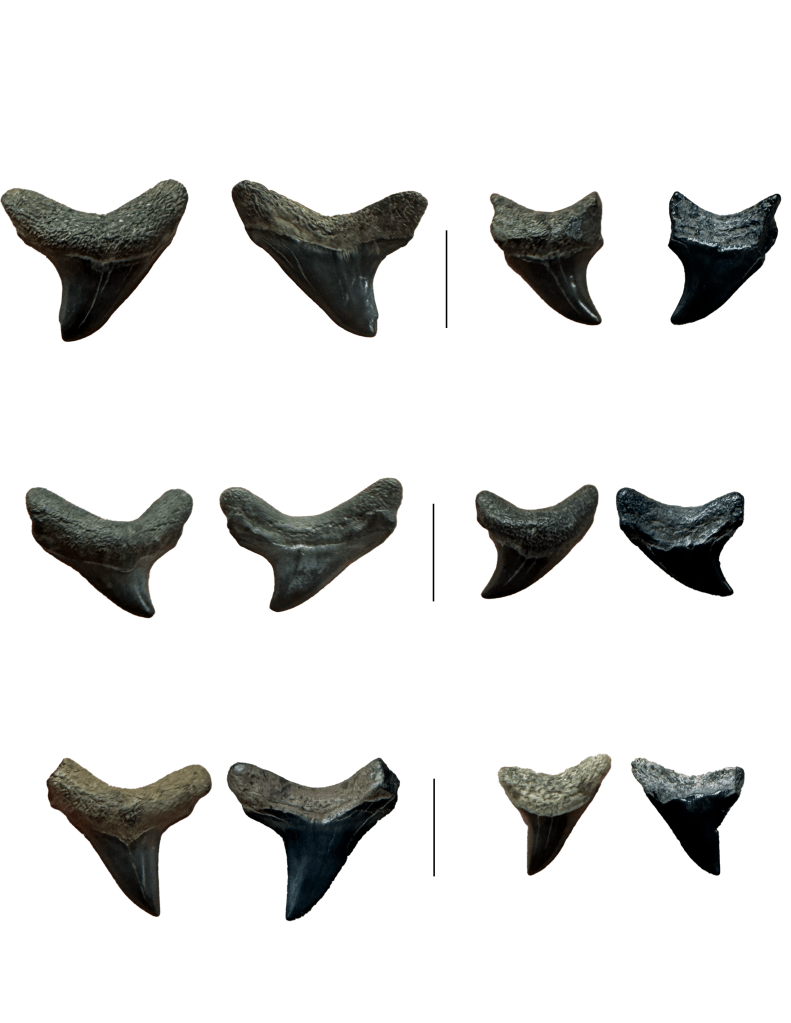
Orectolobiformes
Nurse
Nurse shark teeth, Ginglymostoma sp., are rare finds in regular river sifting as their small size usually goes right through a screen. They are more common when processing gravel at smaller sizes such as 1/8th of an inch. The teeth are small, wide and serrated with flat roots, ideal for their diet of crustaceans.
Hexanchiformes
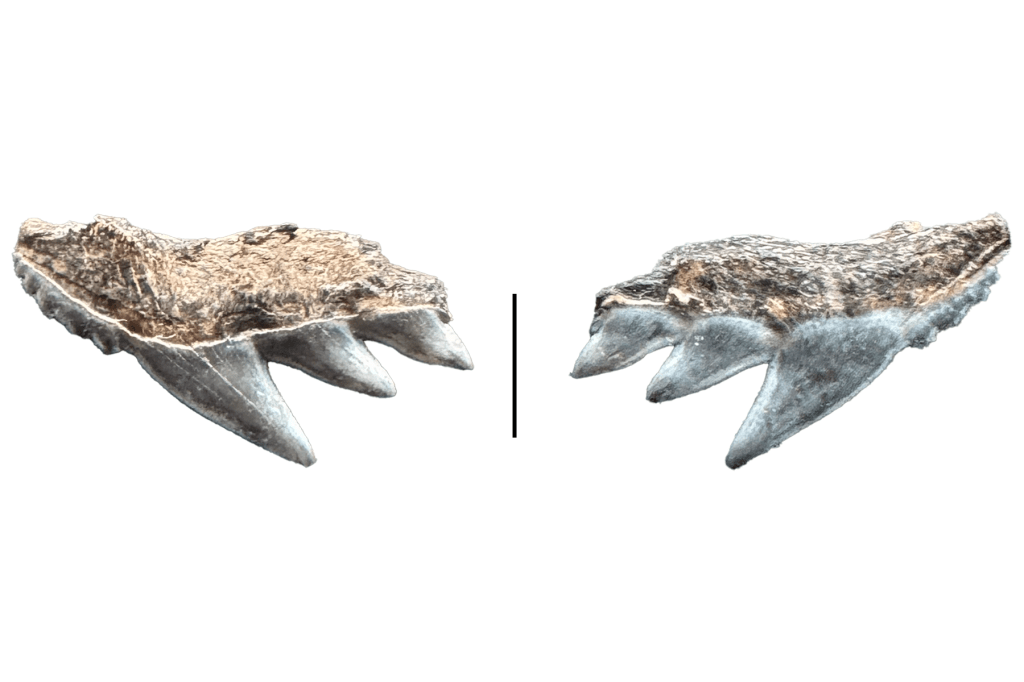
Cow shark teeth, of the genus Notorynchus sp., are one of the rarest teeth to find in the Peace River. They can be found more commonly in other states but due to the age and environment of the Peace they are not often found. They have multiple cusps with the medial being the largest and trending down as well as serrations on the medial side. They also have a smal bourlette. They can resemble damaged tiger shark teeth but the key is angle of the cusps and the lack of serrations commonly seen on both sides of tiger shark teeth.
Carcharhinformes
Tiger Sharks
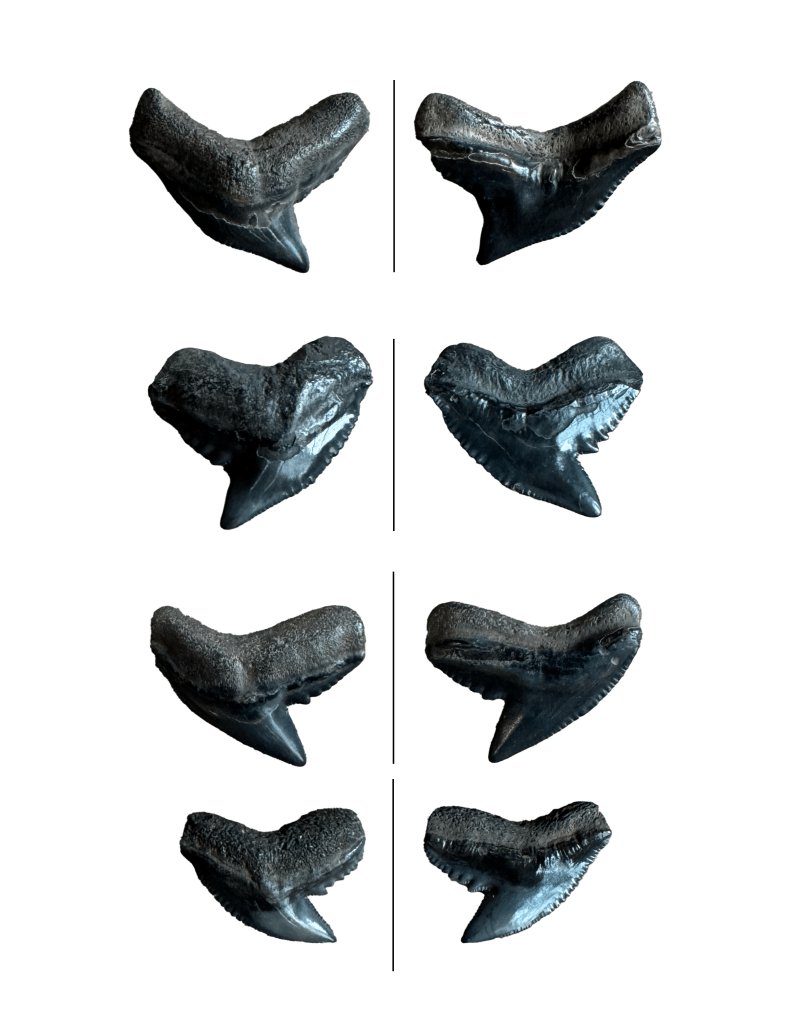
There are 3 species of tiger shark and 1 species of false tiger shark present in the Peace River. They can be incredibly tough to distinguish, especially among worn teeth. The most common species is Galeocerdo cuvier, the species we have swimming in the waters off of Florida to this day. The other species, G. mayumbensis and G. aduncus, are more uncommon. The false tiger shark, Physogaleus contortus, is also less common than cuvier but a regular find for most collectors.
Galeocerdo cuvier
G. cuvier is the modern surviving species of tiger shark and the most common to find in the fossil record of the Peace River. The main distinguishing factor is the complex serrations are both on the heel and lateral edge of the blade and the short blade compared to mayumbensis.
Galeocerdo mayumbensis
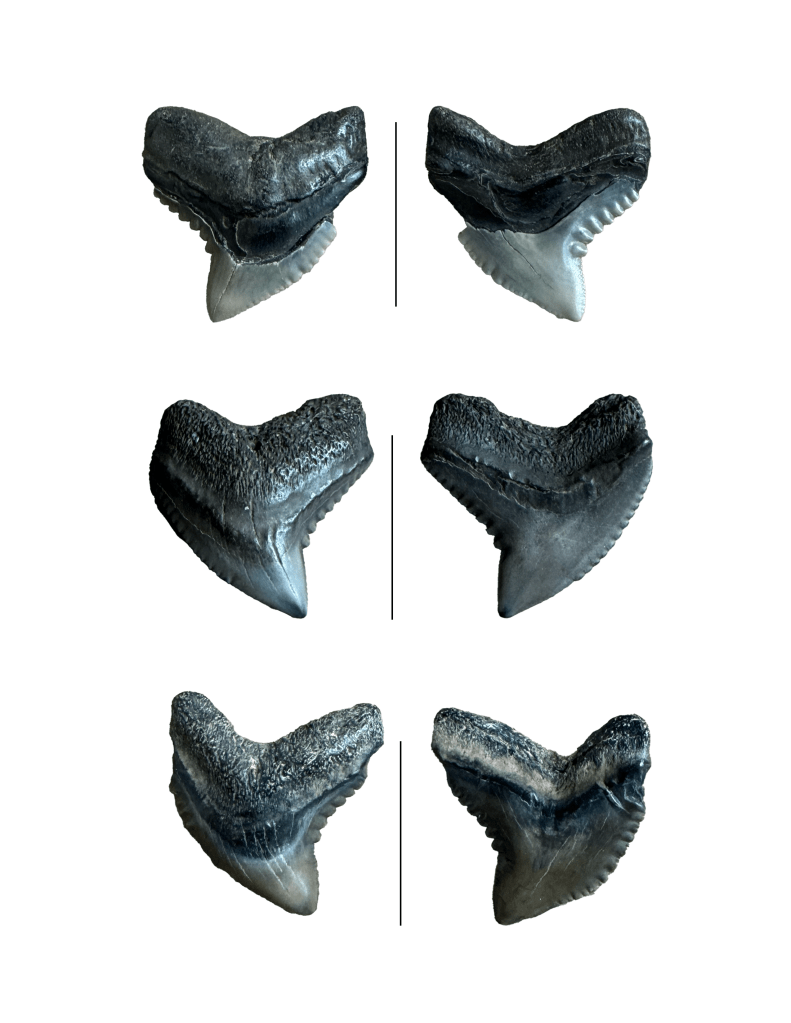
G. mayumbensis was present in the miocene and are a unique species not seen in too many sites around the world. They are an uncommon species of tiger shark for the Peace River. They are long teeth with a wide blade and complex serrations. The main distinguishing factor from other tiger shark species is the relatively tall blade.
Galeocerdo aduncus
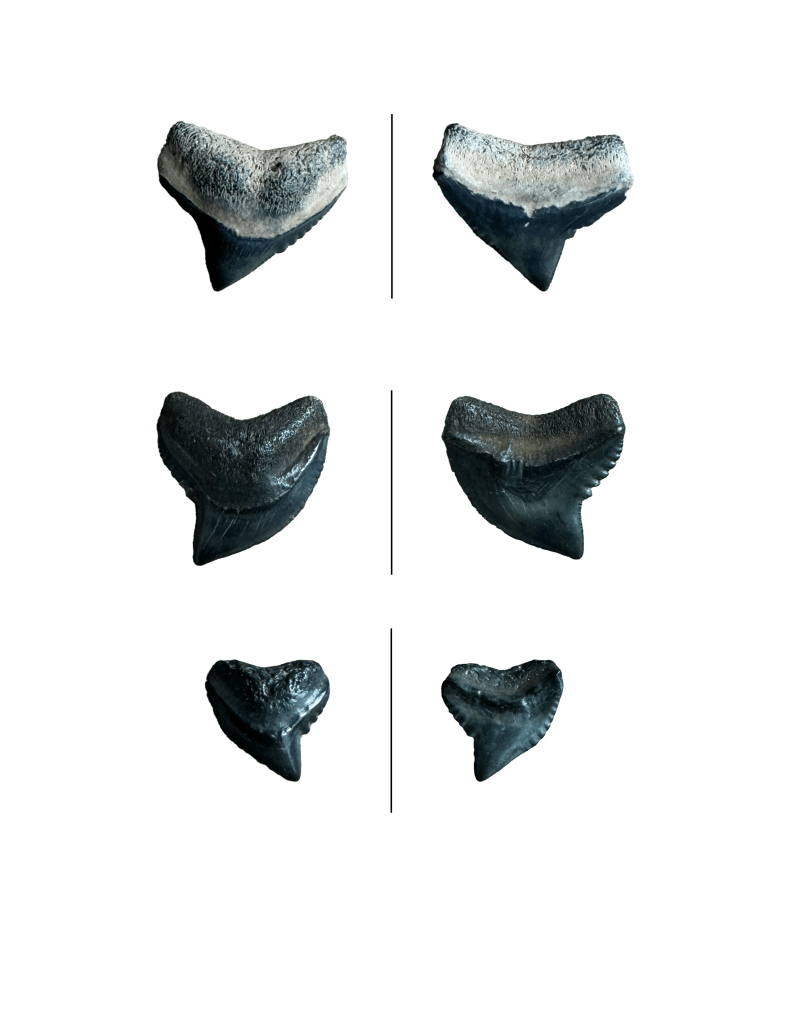
G. aduncus is a another early miocene tiger shark, beginning in the Oligocene and being found commonly in sections the Peace River. They are incredibly similar to G. cuvier but do not have complex serrations on the lateral edge(outside of curve). Some of their teeth are also narrow and hook like, similar to P. contortus.
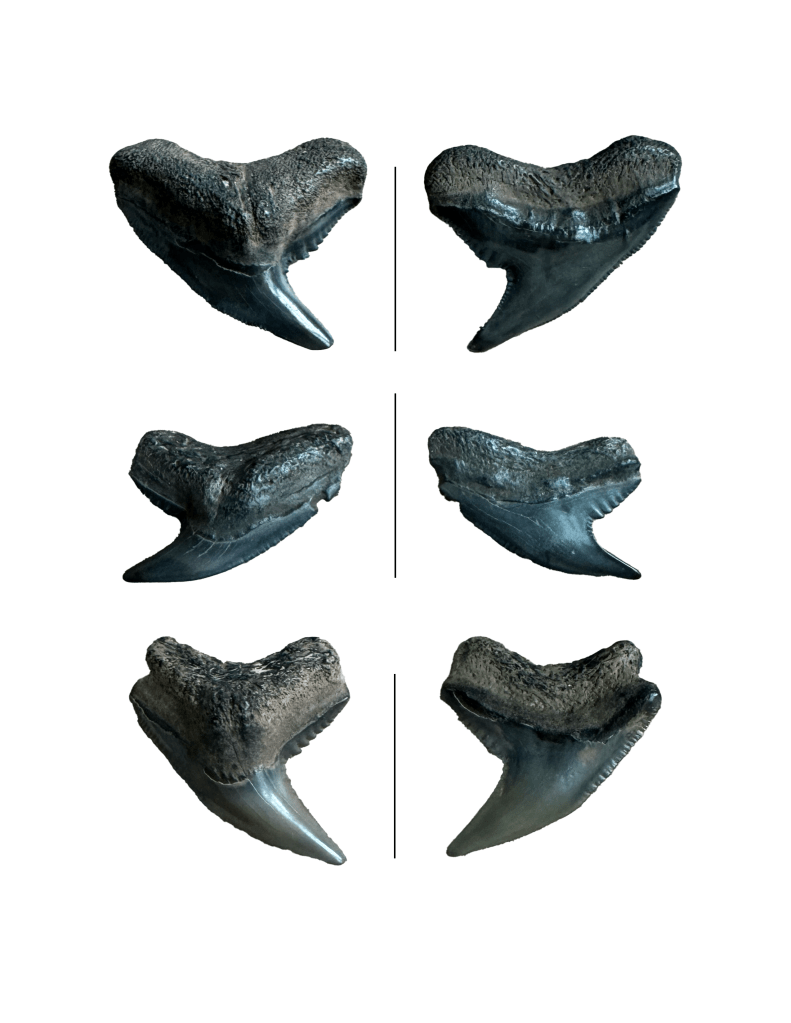
P. contortus
P. contortus was originally thought to be in the Galeocerdo genus due to the morphological similarities. Though they are now considered to be of a separate genus. The teeth are less serrated and more hooked than the tiger shark species. They are similar to aduncus but more common.
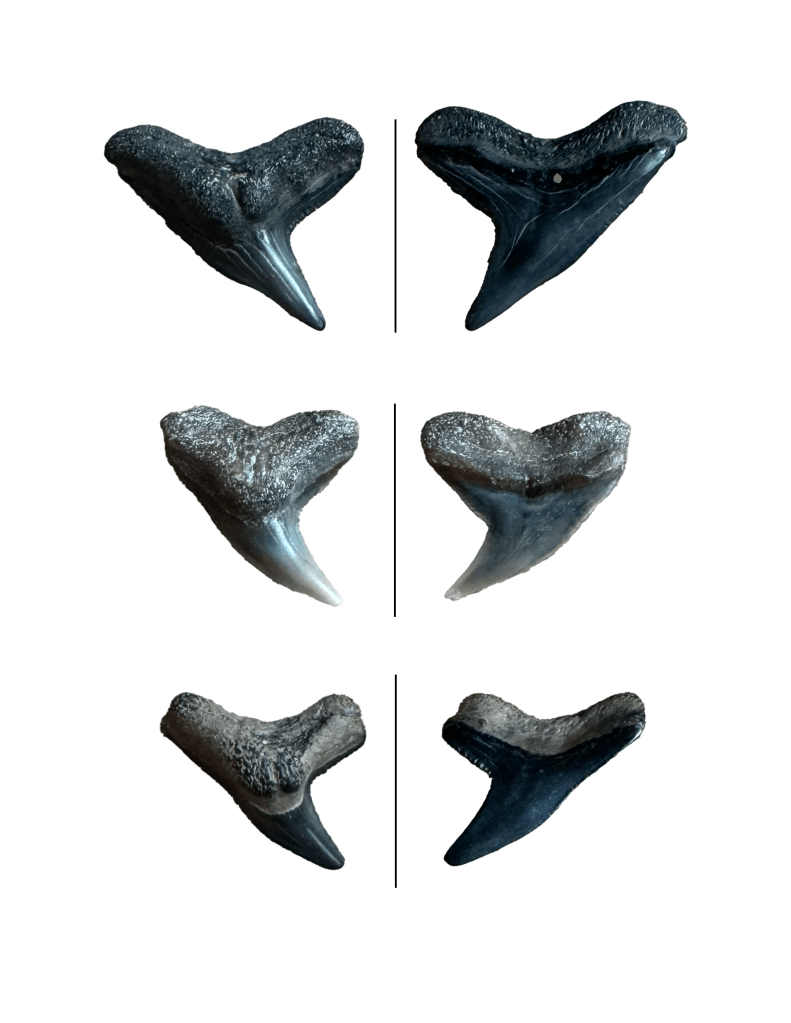
Snaggletooth
Hemipristis serra, the snaggletooth shark, is a common find on the Peace River and upper jaw teeth are easily distinguishable by their large serrations like a steak knife while the lower jaw teeth are straight, narrow and have a notable hump on the root. Snaggletooth teeth can get rather large for the smaller teeth and are very eye catching and easily identifiable compared to other species.
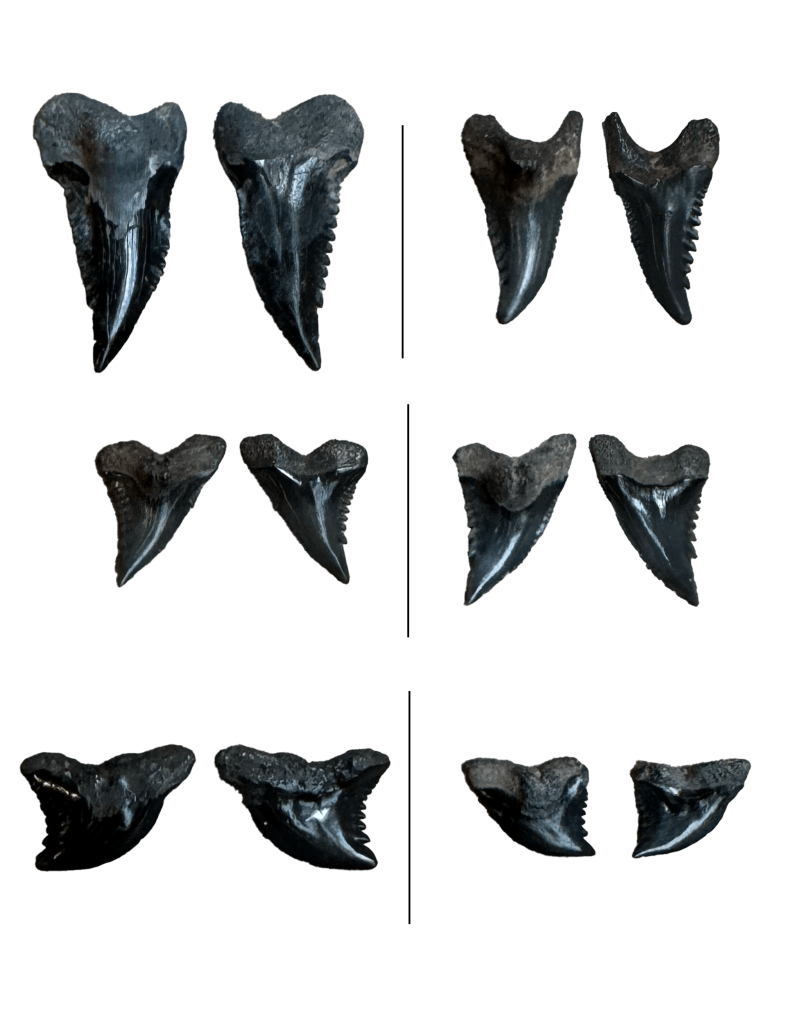
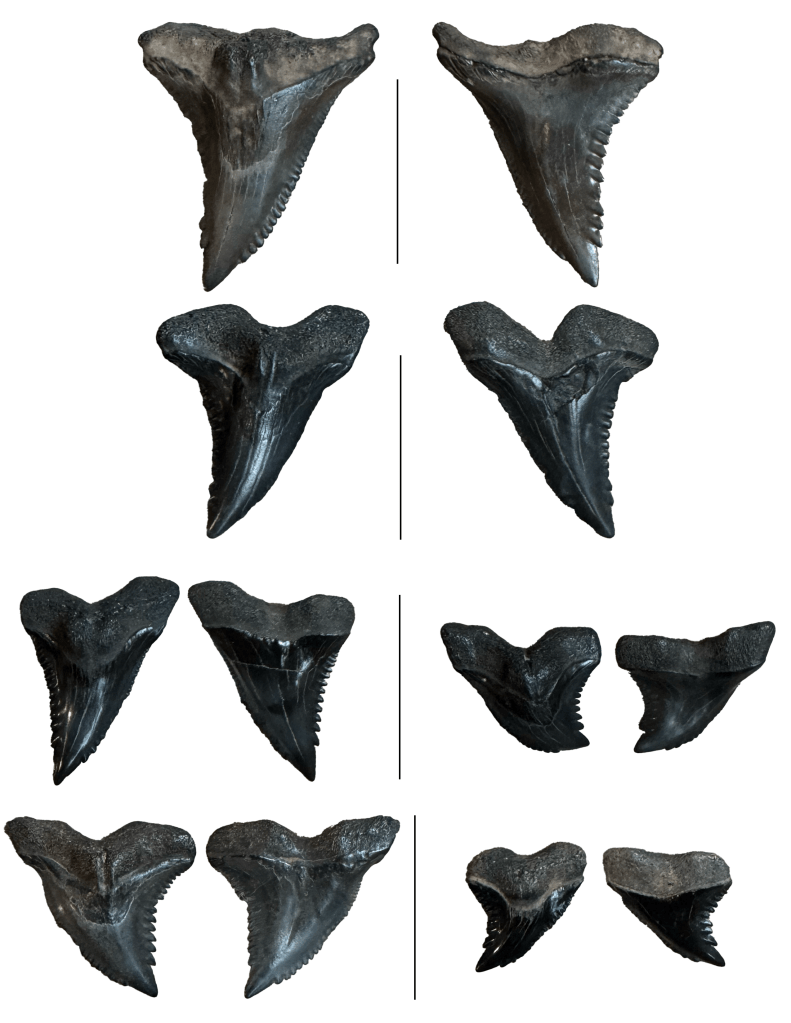
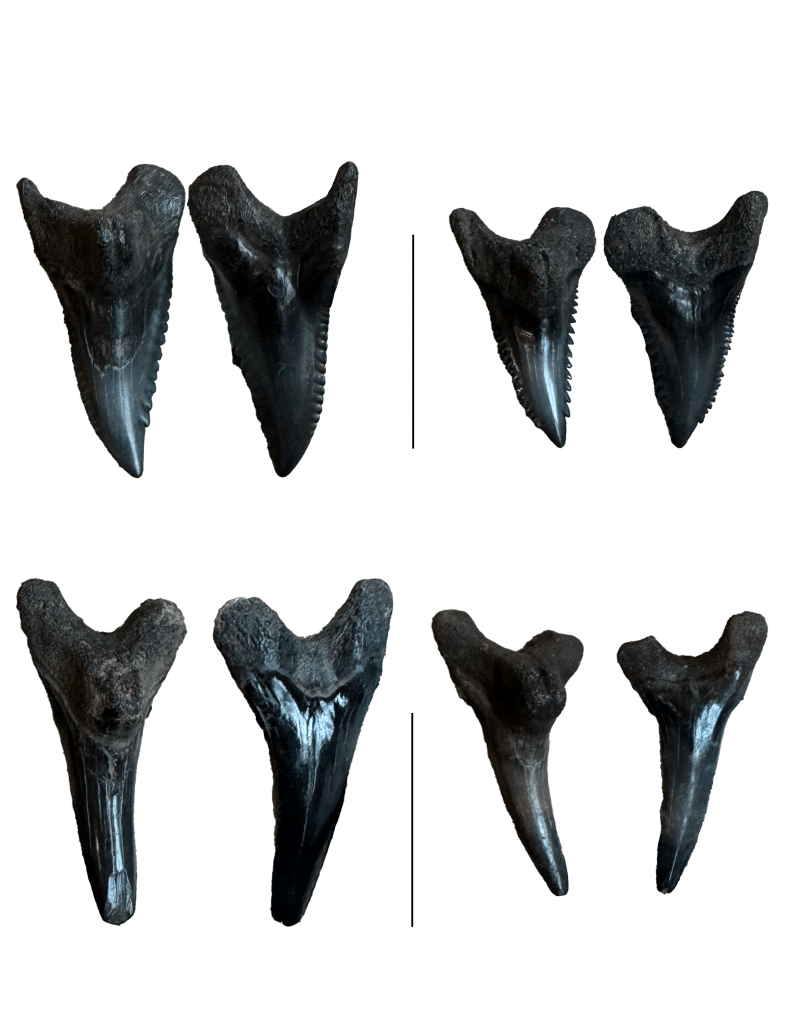
- Similar teeth:
- N. brevirostris (Lemon Shark): smaller with a narrow blade but has a wider, flatter root and a shorter blade in comparison.
Note: Carcharhiniformes are difficult to identify, especially among worn or damaged teeth
Lemon
Lemon shark teeth, Negaprion brevirostris, are one of the most common shark teeth found in the Peace River. They have wide, thin roots with a central notch and narrow blades with no serrations.
Similar teeth:
- Bull Shark: wider blade and fine serrations, lower teeth are more narrow mimicking lemon
- Other reef sharks (including hammerhead): incredibly difficult to discern but may have fine serrations, more curved blades or a lack of a root notch.
Hammerhead
Hammerhead shark teeth, Sphyrna sp., likely represent a few species in the Peace River. The teeth have fat blades with no serrations a deep notch in the distal side of the blade and a notch in the top middle of the root. They can be easily confused with gray sharks but are less common.
Gray/reef sharks
I will include bull sharks here as well as some various examples of reef shark teeth. There are multiple species of reef sharks available in the fossil record of the Peace River but identifying individual species is a detailed and difficult task beyond the range of this site. For exact determinations compare with modern teeth online and research papers on Florida shark teeth.
Vertebrae
There are two main types of vertebrae from sharks that can be found. The most common one is the Scyliorhinoid-type from Carcharhiniform (reef) sharks. They have solid edges with few holes (foramina) in the side, view the references for examples. The other type, Lamnoid, are rare and come from lamniformes such as hastalis, megalodon and sand tiger shark. Hemipristis serra has a unique vertebrae with 2 sets of 2 foramina. Stingray and sawfish vertebra may also be found and appear similar but have different centra and sawfish lack foramina.
Other remains
A multitude of other shark remains can be found in the Peace River, as far as sifting is concerned there is coprolite (fossilized poop!), cartilage, and rostral nodes (though incredibly rare). With time and a microscope there can also be dermal denticles, the thing that gives shark skin that sandpaper-like texture.
Micro Teeth
There are several species of teeth that are not seen well without the aid of magnifying glasses or microscopes but represent unique species that should be included as I am able to find them. For the amateur collector this can be done by spreading gravel on a paper plate and using a magnifying glass to slowly search for unique fossils, common finds are fish and ray teeth.
Sharpnose
Sharpnose, Rhizoprionodon sp., are small, heavily curved teeth with thin roots and a root notch. They have thin unique blades that help identify them as separate from lemon shark teeth. They are most commonly found in smaller size gravel below sifter size.
What is missing?
Some teeth are rare to the point that I do not own even a partial in my collection to use as reference here. So what species are likely there just elusive? Though I have not personally seen one found there are possibly teeth from Carchardon carcharias (great white), cow sharks, Alopias grandis (giant thresher), Alopias palatasi (giant serrated thresher) and more in the Peace River. If any are found by readers please contact me! I would love to see them!
