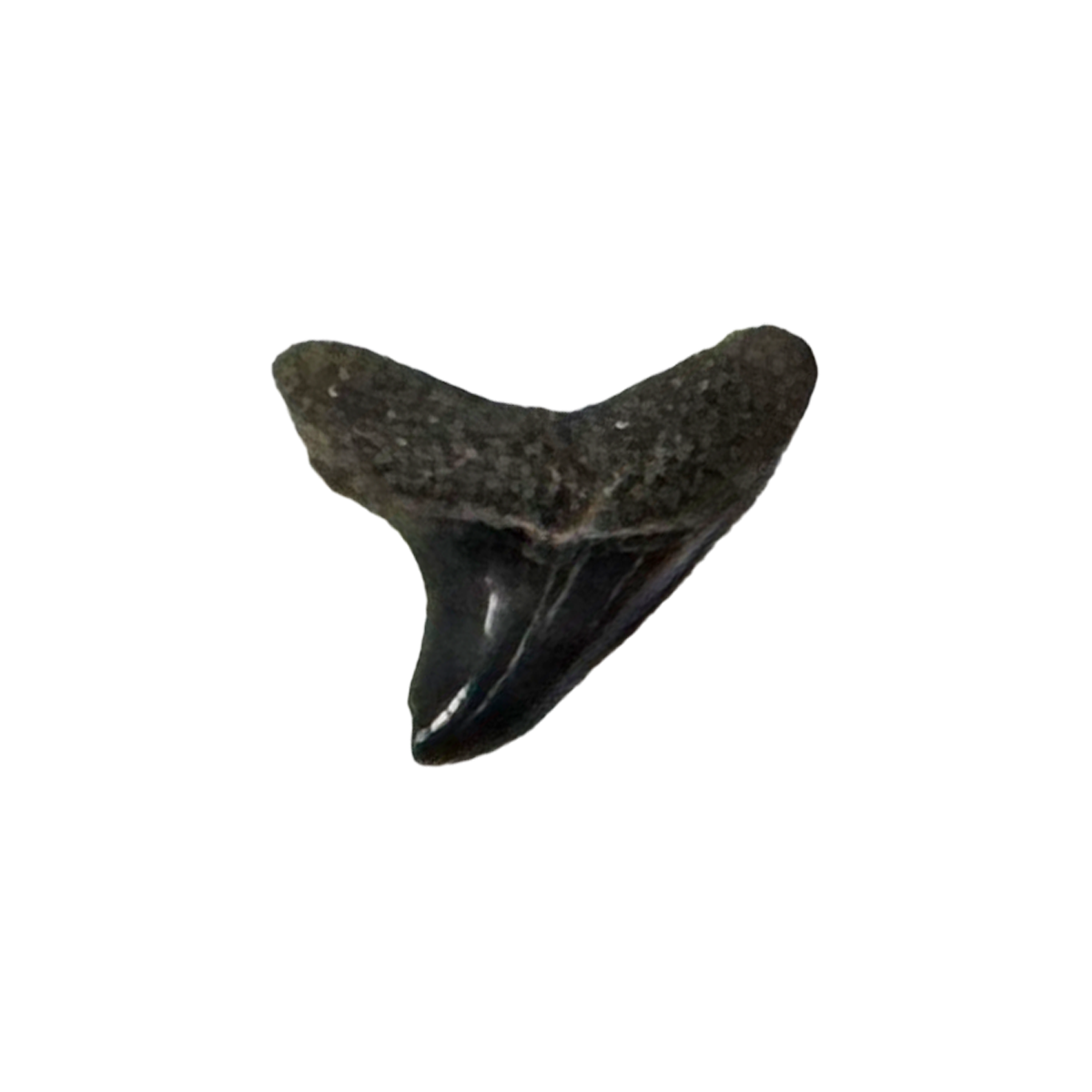
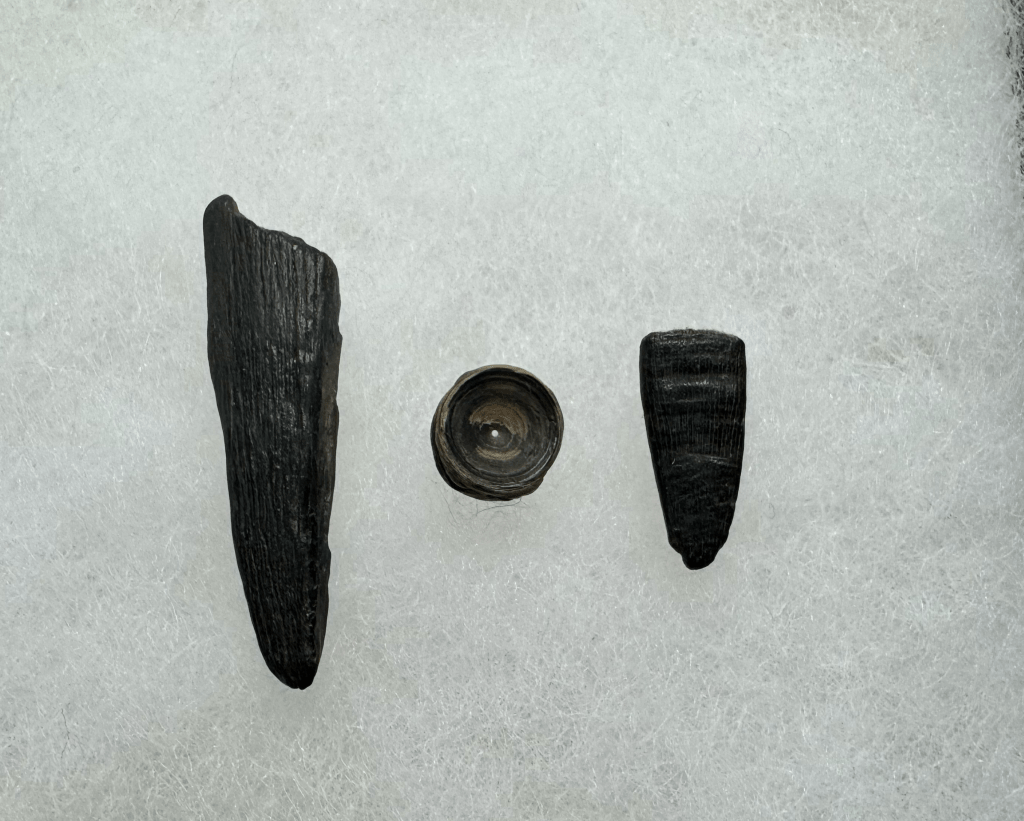
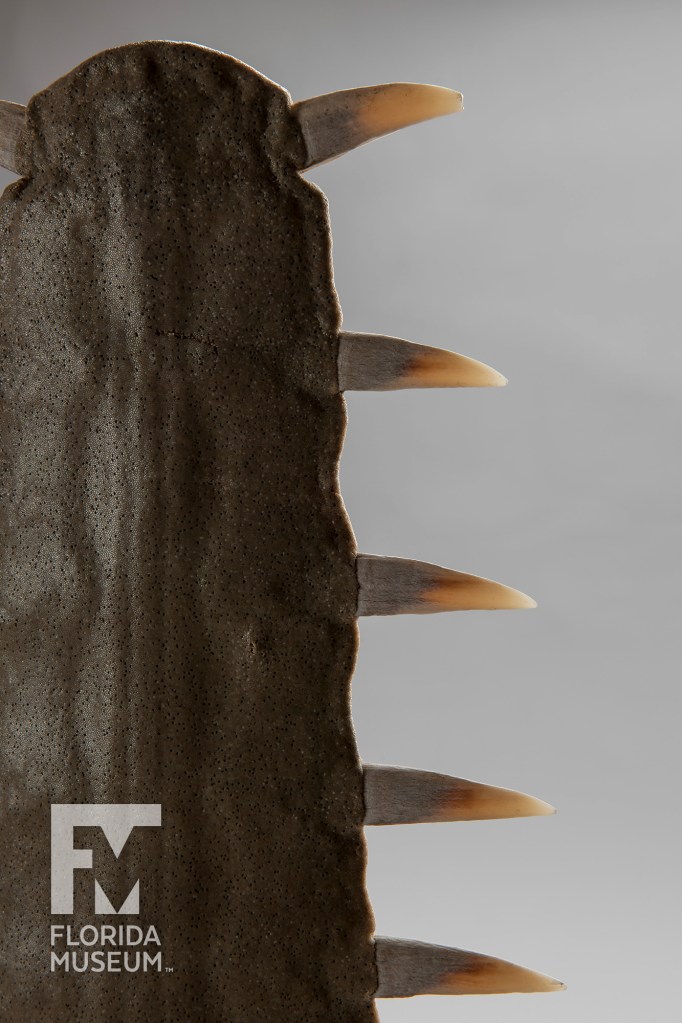
Sawfish are a cartilaginous fish (chondrichthyan) alongside sharks and rays. They are still present around Florida with the smalltooth sawfish Pristis pectinata, though they are endangered. There are a three main types of sawfish fossils that can be found in the Peace River: Rostral teeth, vertebrae, and oral teeth. Oral teeth are microscopic and rare while rostral teeth are relatively common.
Rostral Teeth
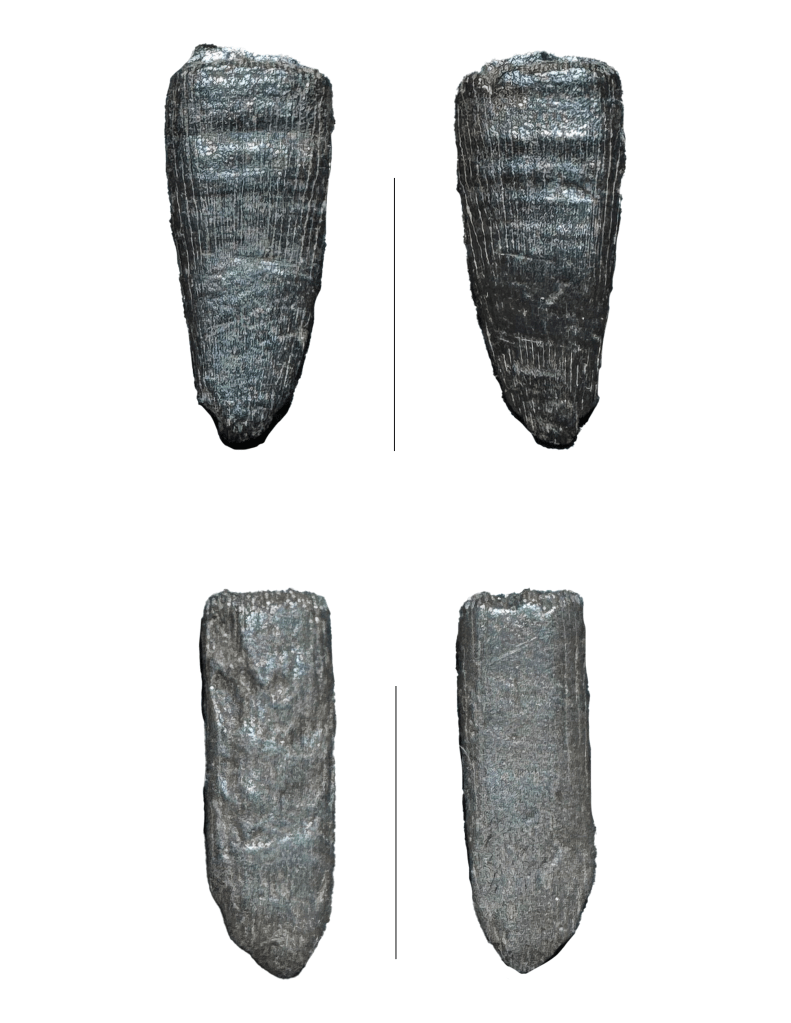
There are likely multiple species of sawfish in the Peace River but for now I will keep it general. The teeth are uncommon in general but as far as sawfish go they are the most regularly found. The teeth lack enamel and are easily mistaken for fossilized bone fragments but can be best identified by the appearance similar to a dull knife with tapering towards an edge and tapering towards a dull point. In less worn examples there is a groove in the flat side. They have vertical striations and are usually rather thin.


Vertebrae
Sawfish vertebrae are very similar in appearance to shark vertebrae. They are circular with rings similar to tree growth rings. The main difference between sawfish and shark vertebrae is the lack of foramina (holes) in the sides. The sides are completely smooth but slightly indented from the outer ring. In my experience they are rare in the Peace River and I have only found 1 at this point.


