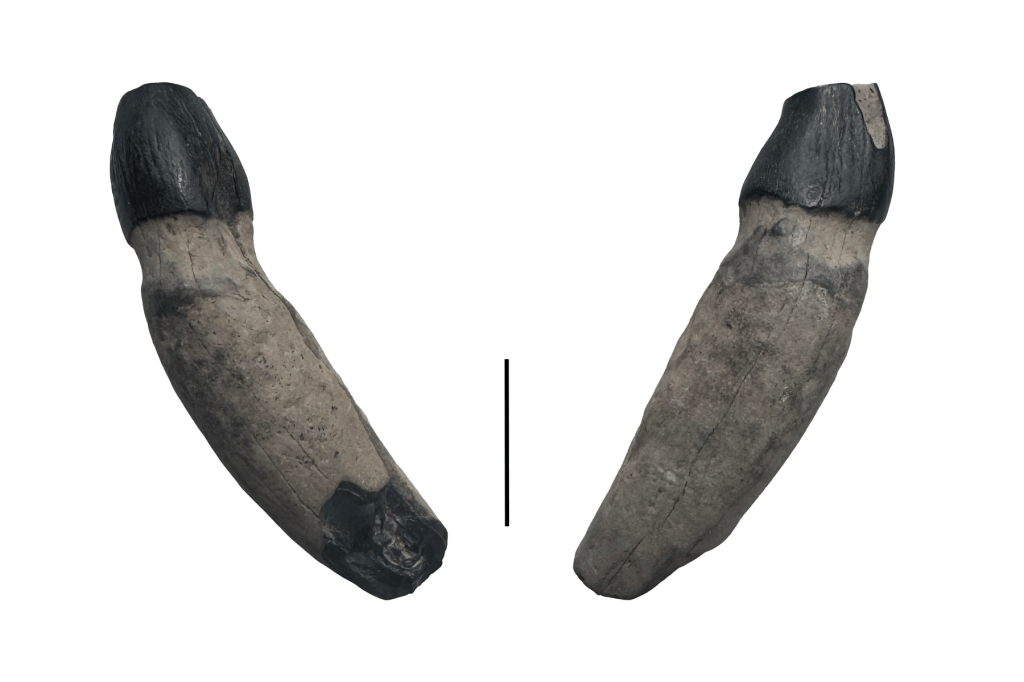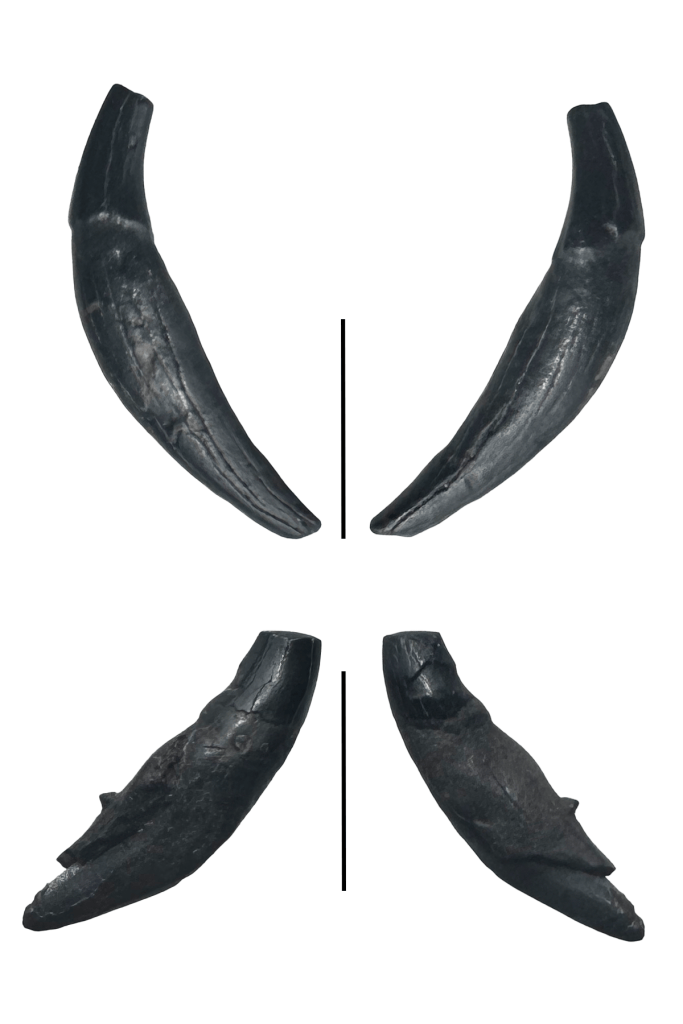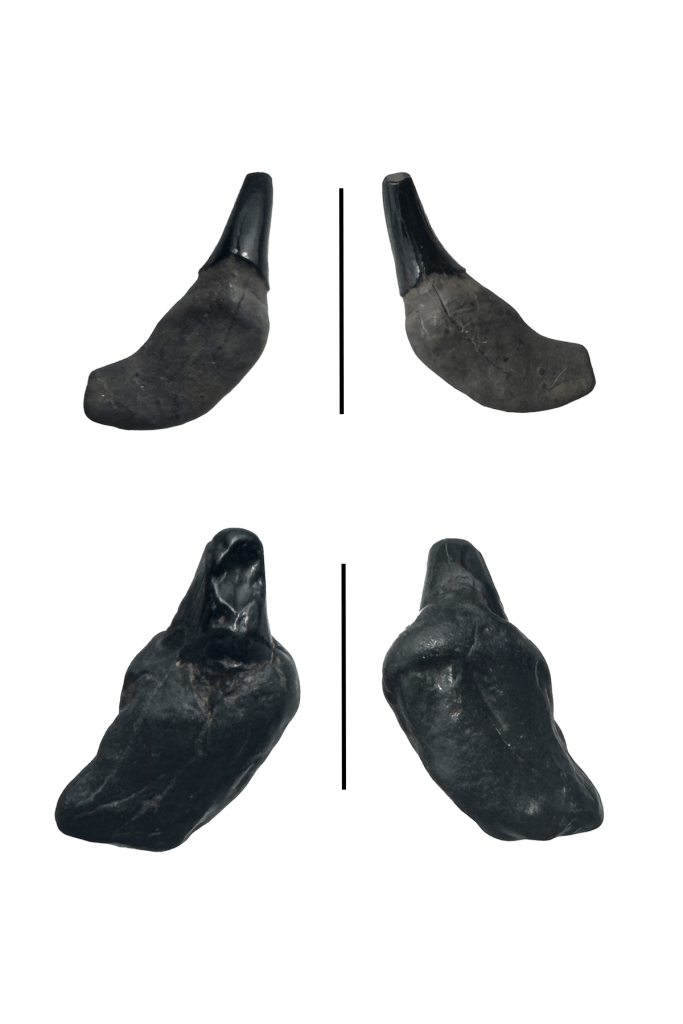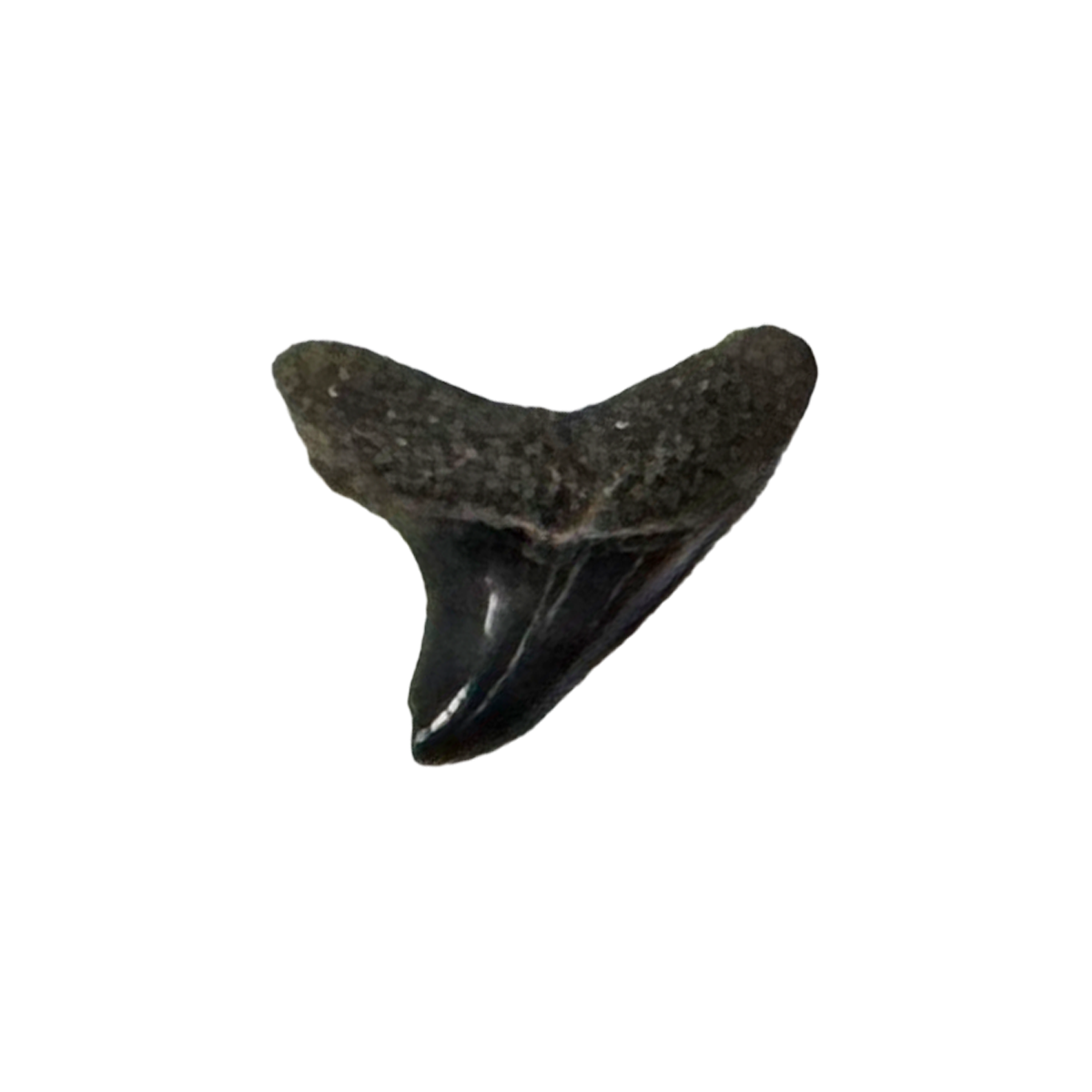
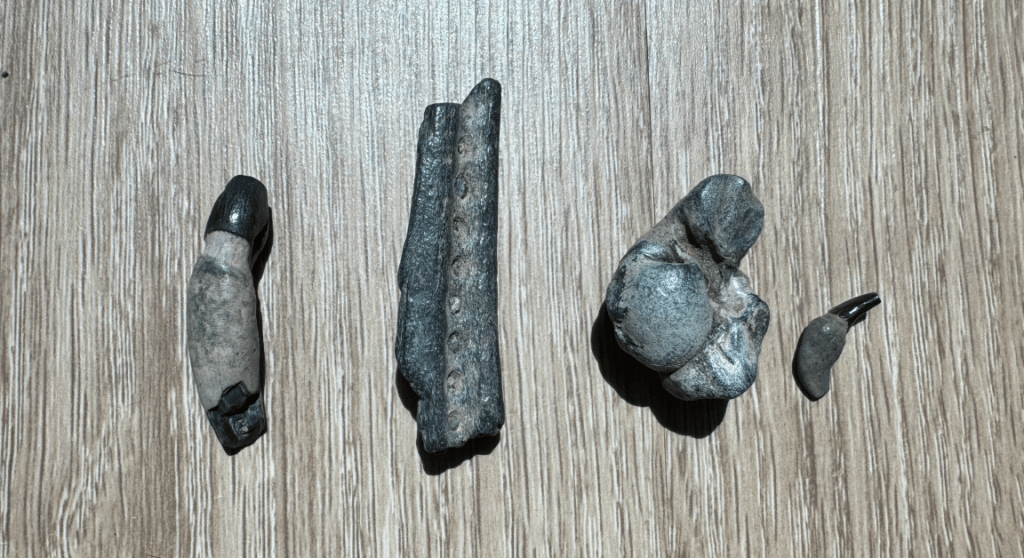
There are a variety of cetacean fossils to be found in the Peace River though they are relatively uncommon. Typical remains are bones, such as vertebrae, ear bones and jaws, and isolated teeth. There are many more cetacean bones to be found but are often too broken or undiagnostic to classify as anything in particular. As with any bone it is important to check for bite mark as shark teeth often left deep grooves into cetacean bones that are still visible on the fossils today!
Dolphins
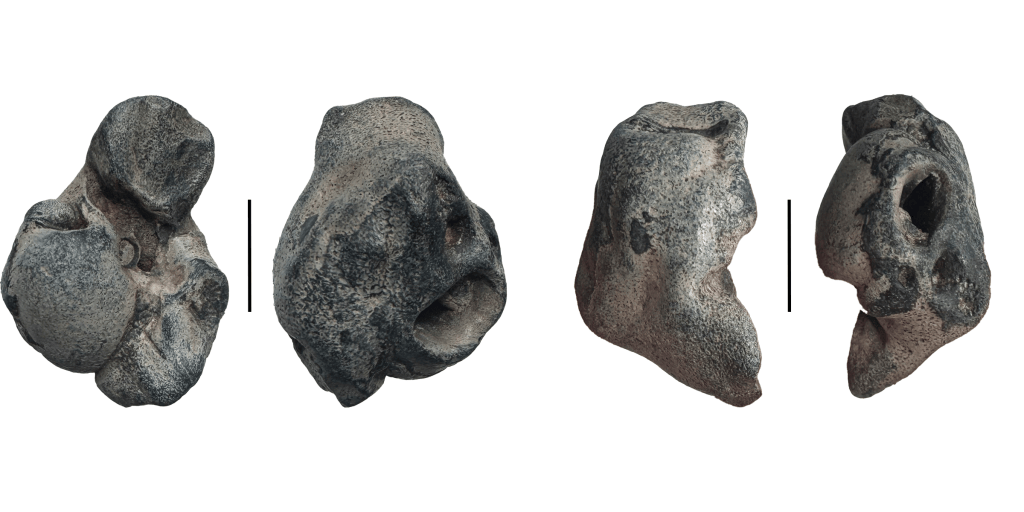
The most common cetacean to find in the Peace River are the variety of dolphin species in the Peace River. The one that I am familiar with is the genus Pomatodelphis. From porpoise one can find jaw bones, vertebrae, ear bones and teeth.
Jaws
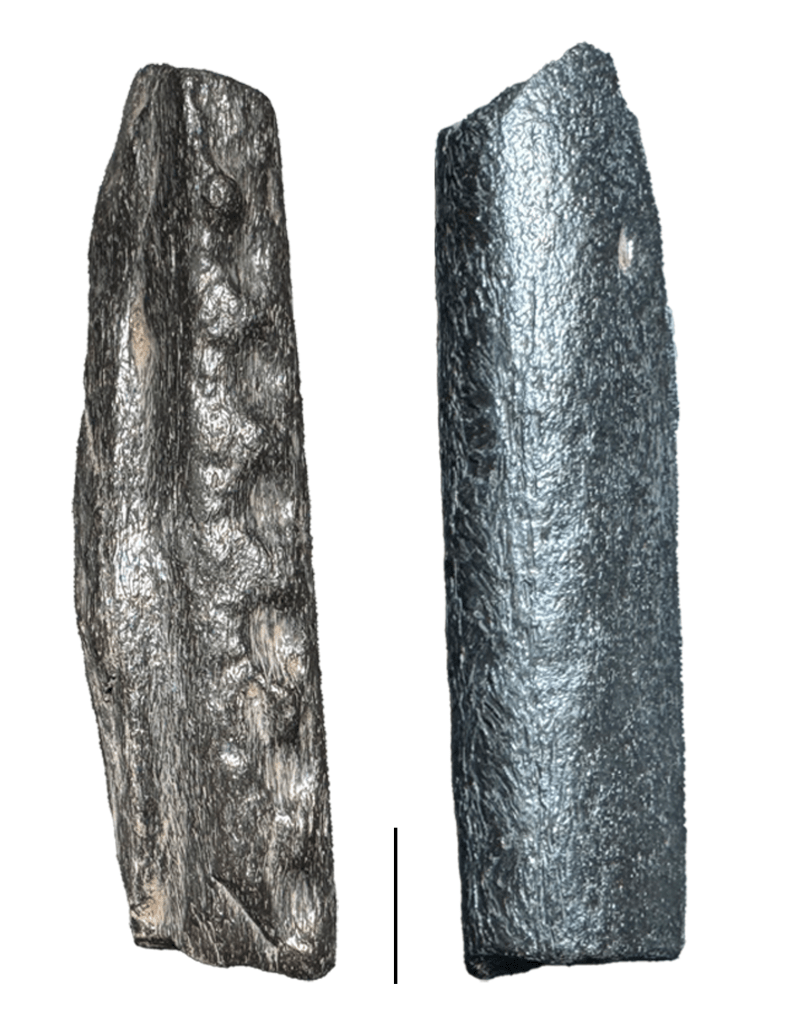
Porpoise Jaws are long and slender, easily mistakable for a worn rib fragment. They are typically lacking any teeth or even fragments with very shallow indents where teeth used to be. They come in a range of preservation states but the main identifying factor to look for is shallow, round and regular indentations into a bone.

Ear Bones
Vertebrae
Teeth
Dolphin teeth are relatively common in the river, significantly more common than whale teeth, possible due to the environment that the fossils were preserved in though there is a lack of currently published research on the Peace River. There is likely a mix of taxon for dolphin teeth though they are hard to identify as isolated finds. They vary in shape and size but larger ones (as seen below) are conical with an additional curve near the tip of the tooth. The root is angulated but only slightly. Some other species have narrow, curved blades with proportionally bulbous roots. It is important to know the variations to best identify finds.